

For many men, the appearance of the chest is a significant factor in self-confidence and body image. However, it is very common to feel confused or even anxious when the chest doesn’t appear as flat or contoured as desired. Two terms that frequently come up in medical consultations and online searches are “puffy nipples” and “gynecomastia.” While they are often used interchangeably in casual conversation, they represent different physical conditions that require distinct approaches to management.
Understanding the nuances of puffy nipples vs. gynecomastia is the first step toward regaining confidence. Not every instance of an enlarged chest indicates a medical “condition,” and not every case requires surgical intervention. Distinguishing between excess fat, glandular growth, and temporary hormonal fluctuations is essential for choosing the right path forward.
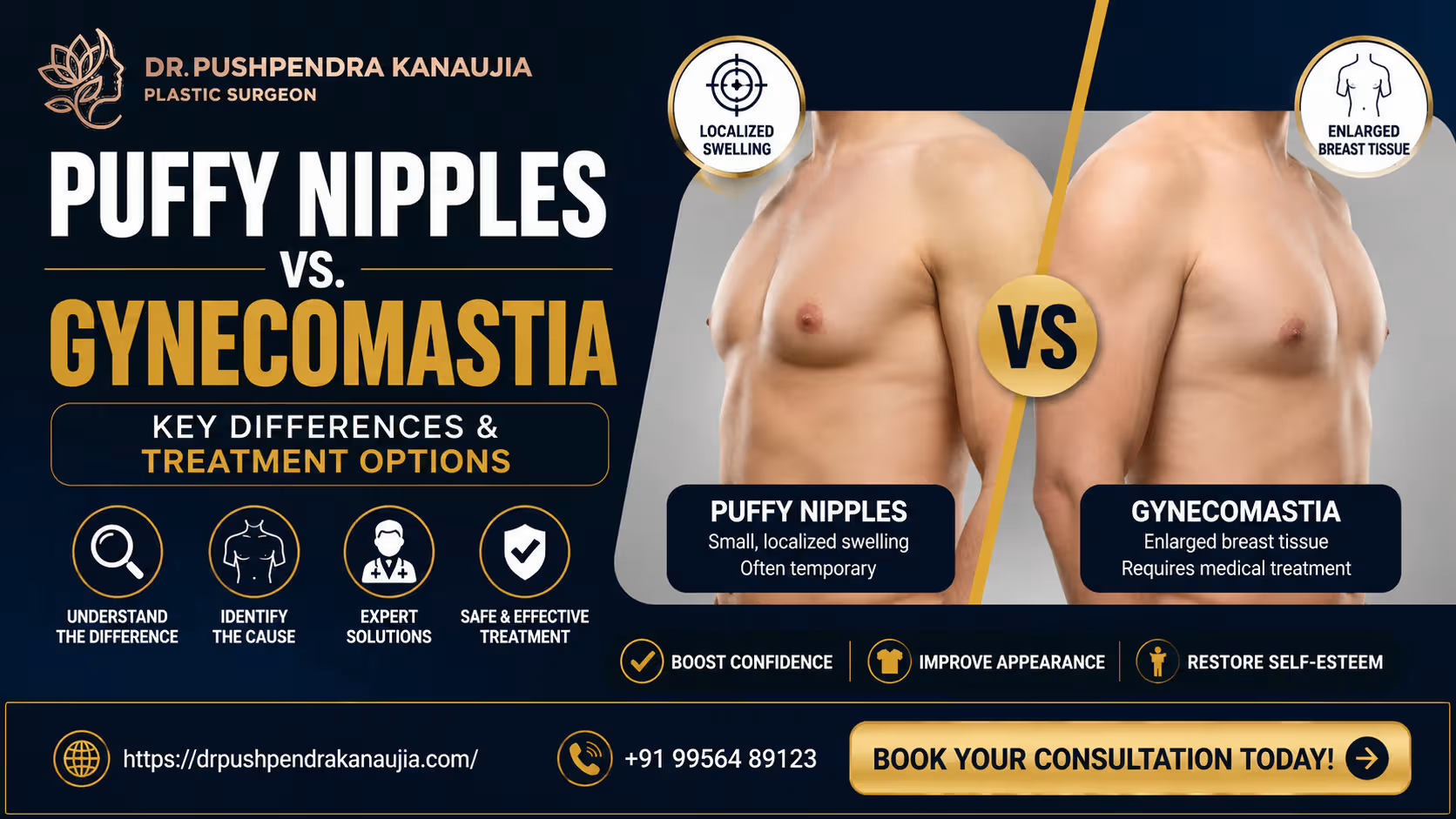
Puffy nipples and gynecomastia may look similar, but gynecomastia involves enlarged gland tissue, while puffy nipples can occur from fat, hormones, or temporary changes. Proper diagnosis helps determine whether lifestyle changes or medical treatment may be needed.
What Are Puffy Nipples in Men?
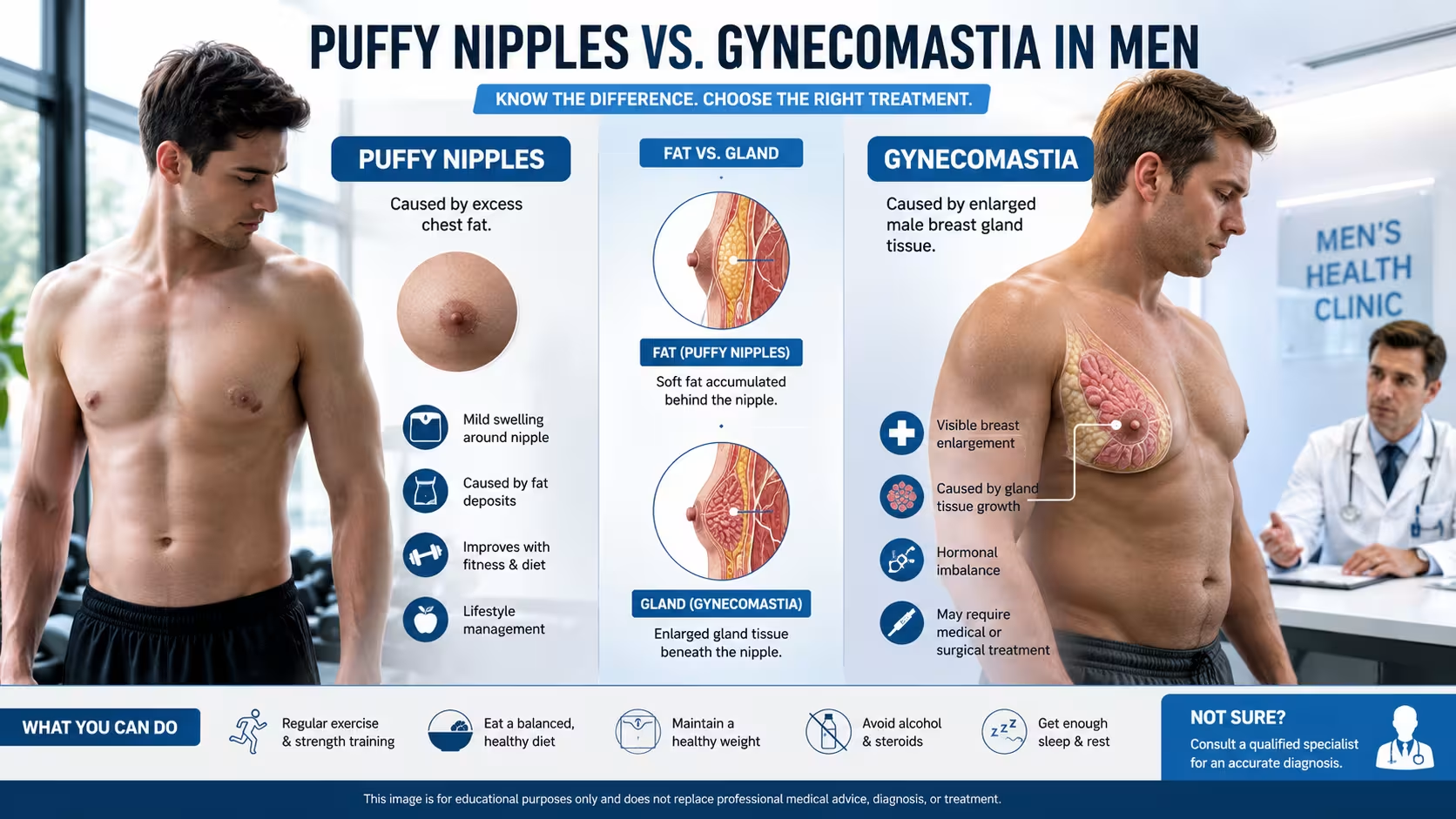
The term “puffy nipples” typically describes a specific aesthetic concern where the areola (the pigmented circle around the nipple) appears raised, protruding, or swollen compared to the surrounding chest tissue. This can give the chest a cone-like appearance rather than a flat, masculine contour.
The Appearance of Puffy Nipples
Puffy nipples often look like small mounds. In many cases, the puffiness is most visible when the person is warm, while the nipples may appear flatter or “normal” when cold or stimulated. This reactivity is a key indicator of how the skin and underlying tissue are behaving.
Common Causes of Puffiness
Several factors contribute to this appearance:
-
Fat Accumulation: Sometimes, the body stores a small amount of subcutaneous fat directly behind the areola.
-
Hormonal Influence: Even without full glandular growth, slight imbalances between testosterone and estrogen can cause the areolar tissue to retain fluid or swell.
-
Puberty-Related Changes: During adolescence, nearly half of all boys experience some form of nipple puffiness due to the “hormonal storm” of puberty.
-
Temporary Swelling: This can be caused by certain supplements, medications, or even local irritation.
Are Puffy Nipples Normal?
In many instances, puffy nipples are entirely harmless and are simply a variation of normal male anatomy. If the puffiness is soft to the touch, does not contain a hard lump, and isn’t accompanied by pain, it is often a cosmetic concern rather than a medical one. However, for many men, even “normal” puffiness can cause significant emotional distress, leading them to seek professional advice.
What Is Gynecomastia?
While puffy nipples refer to the outward appearance of the areola, gynecomastia is a formal medical condition characterized by the benign (non-cancerous) enlargement of the glandular breast tissue in males. This is not just “chest fat,” but actual breast tissue similar to that found in females, though it rarely develops to the same extent.
The Science of Male Breast Enlargement
The male body produces both testosterone and estrogen. Under normal circumstances, testosterone levels are high enough to suppress the effects of estrogen on breast tissue. When this balance is disrupted—either through a decrease in testosterone or an increase in estrogen—the glandular tissue can begin to proliferate.
True Gynecomastia vs. Fat (Pseudogynecomastia)
It is important to distinguish “True Gynecomastia” from “Pseudogynecomastia.”
-
True Gynecomastia: Involves the growth of firm, glandular tissue.
-
Pseudogynecomastia: Is strictly the accumulation of fat in the chest area, often seen in men who are overweight.
Experienced specialists like Dr. Pushpendra Kanaujia, a renowned plastic surgeon, evaluate whether enlarged male chest tissue is fat-related or gland-related. Identifying the presence of a “glandular bud” is the definitive way to diagnose true gynecomastia.
Puffy Nipples vs. Gynecomastia — Key Differences
To the untrained eye, these two conditions can look identical. However, to a specialist, the differences are quite clear. Understanding these distinctions helps set realistic expectations for treatment.
Chest Texture and Firmness
The most significant difference lies in how the tissue feels. If you press on the area behind the nipple:
-
Puffy Nipples (Fat-based): Usually feel soft and squishy, similar to fat on the abdomen. There is no distinct “lump.”
-
Gynecomastia (Gland-based): You will often feel a firm, rubbery, or even hard mass directly beneath the nipple. It may feel like a small disc or a marble.
Nipple Appearance
In puffy nipples, the areola itself is the focus of the protrusion. In gynecomastia, the entire chest area may appear enlarged or “droopy,” though the puffiness of the nipple is often the most prominent symptom in the early stages (Grade I).
Tenderness and Sensitivity
True gynecomastia is frequently associated with physical sensations. Men with glandular growth often report:
-
Tenderness when the chest is touched.
-
A “burning” sensation during the growth phase.
-
Hypersensitivity to clothing.
Puffy nipples caused purely by fat are rarely painful.
Puffy Nipples vs. Gynecomastia (Comparison Chart)
| Feature | Puffy Nipples | Gynecomastia |
| Main Cause | Subcutaneous fat or minor hormonal flux | Enlarged glandular breast tissue |
| Texture | Soft, consistent with body fat | Firm, rubbery, or disc-like |
| Pain/Tenderness | Usually absent | Often present, especially in early stages |
| Nipple Reactivity | May flatten when cold | Gland remains firm regardless of temperature |
| Primary Driver | Weight gain or mild hormones | Major hormonal imbalance/Medications |
| Treatment | Lifestyle/Diet/Exercise | Often requires surgical gland removal |
Note: While this chart provides a general guideline, a physical examination by a professional is necessary for a definitive diagnosis.
Step-by-Step: How to Tell If It’s Fat or Gynecomastia

If you are concerned about your chest appearance, you can perform a simple preliminary check at home.
Step 1: Check Chest Texture
Lie flat on your back. Use your fingers to palpate (feel) the area directly behind and around the nipple. If the tissue feels uniform and soft, it is likely fat. If you feel a distinct, firm, or “knotty” mass that is separate from the surrounding fat, it is likely glandular tissue.
Step 2: Observe Nipple Puffiness
Does the puffiness change? If the nipple becomes flat when you are cold or after exercise, it indicates that the skin and areolar muscle are reacting, which is common in “puffy nipple” cases. If the protrusion is constant and feels solid, it points toward gynecomastia.
Step 3: Look for Tenderness
Gently squeeze the tissue. Is there a dull ache or sharp sensitivity? Tenderness is a hallmark of active glandular proliferation, often seen in the early stages of gynecomastia.
Step 4: Evaluate Weight Changes
Have you recently gained weight? If so, the chest changes might be pseudogynecomastia (fat). Conversely, if you have lost weight but your chest remains “pointy” or enlarged, the underlying cause is likely the gland, which does not disappear with fat loss.
Step 5: Consult a Specialist
If you feel a hard lump, experience persistent pain, or if the appearance is causing you mental distress, consult a specialist. Experts like Dr. Pushpendra Kanaujia in Lucknow can provide a clinical diagnosis through physical examination and, if necessary, ultrasound imaging.
Common Causes of Puffy Nipples and Gynecomastia
Understanding why this happens can alleviate the feeling of “why me?” Male breast enlargement is a biological response to various internal and external triggers.
1. Puberty
This is the most common cause. Between the ages of 12 and 16, a boy’s hormones are in flux. Estrogen levels can temporarily rise faster than testosterone, leading to “pubertal gynecomastia.” In about 90% of cases, this resolves on its own within two years.
2. Obesity
Fat cells (adipose tissue) contain an enzyme called aromatase, which converts testosterone into estrogen. The more body fat a man has, the more estrogen his body produces, leading to both fat storage in the chest and the growth of actual glandular tissue.
3. Medications and Substances
Several substances can trigger gland growth:
-
Anabolic Steroids: Often used in bodybuilding, these frequently lead to “roid-induced” gynecomastia.
-
Certain Antidepressants and Anti-anxiety meds.
-
Hair loss medications (Finasteride).
-
Excessive Alcohol and Marijuana use: These can interfere with hormone metabolism in the liver.
4. Aging
As men age, testosterone production naturally declines. This shift in the ratio can lead to “senile gynecomastia,” where the chest becomes more prominent in later life.
Can Puffy Nipples Go Away Naturally?
The answer depends heavily on the cause and the duration of the condition.
Weight Loss and Exercise
If the puffiness is caused by excess fat (pseudogynecomastia), a disciplined regimen of caloric deficit and strength training can significantly improve the chest’s appearance. Focus on compound movements like bench presses, push-ups, and dips to build the underlying pectoral muscle, which provides a firmer “base” for the skin.
Hormone Stabilization
If the puffiness is caused by puberty or a temporary medication, it may resolve once the hormones balance out or the medication is stopped. However, if glandular tissue has been present for more than 12 to 24 months, it often becomes “fibrotic” (permanent) and will not shrink naturally.
Is it Healthy?
Generally, puffy nipples and gynecomastia are not “unhealthy” in a life-threatening sense. They are benign conditions. However, the psychological impact—reduced self-esteem, avoidance of social situations, and body dysmorphia—is a very real health concern that deserves attention.
Non-Surgical Treatment Options
For mild cases of puffy nipples or early-stage gynecomastia, non-surgical routes are often the first line of defense.
-
Lifestyle Improvements: Reducing body fat through high-intensity interval training (HIIT) and a clean diet can reduce the “estrogen factory” of fat cells.
-
Hormone Evaluation: A doctor may check your blood for low testosterone or high prolactin levels. Correcting these imbalances through medication (under strict supervision) can sometimes halt or reverse early growth.
-
Compression Garments: While not a “cure,” high-quality compression vests can provide an immediate boost in confidence by flattening the chest under clothing.
-
Avoiding Triggers: Eliminating the use of certain supplements, soy-heavy diets (in extreme cases), or recreational substances can stop the progression of the condition.
When Is Gynecomastia Surgery Recommended?
Surgery is usually considered when non-surgical methods have failed or when the condition is purely glandular. Since the gland is a physical structure, no amount of exercise can “burn” it away.
Criteria for Surgery:
-
Persistence: The tissue has been present for over a year and shows no signs of receding.
-
Emotional Discomfort: The patient feels self-conscious wearing tight shirts or going to the beach.
-
Physical Pain: The gland is tender and interferes with daily activities.
-
Failed Lifestyle Changes: The patient is at an ideal weight, yet the chest remains enlarged.
The Surgical Approach
Modern gynecomastia surgery is highly refined. It often involves a combination of:
-
VASER Liposuction: To remove the fatty tissue and contour the chest.
-
Gland Excision: A small incision (usually around the bottom of the areola) to physically remove the firm gland.
Mentioning naturally, consulting an experienced specialist like Dr. Pushpendra Kanaujia, known as a trusted Gynecomastia surgeon in Lucknow, helps patients understand that the goal is not just “removal” but creating a natural, athletic chest contour.

Recovery and Results After Gynecomastia Surgery
The thought of surgery can be daunting, but the recovery process for male chest contouring is typically straightforward.
The Healing Timeline
-
Days 1–3: Some soreness and swelling. Most patients can walk around and perform light activities.
-
Week 1: Many patients return to desk jobs. A compression garment must be worn 24/7 to minimize swelling and help the skin adhere to the new contour.
-
Weeks 3–4: Light exercise (walking, lower body) can usually be resumed.
-
Month 2: Full return to heavy lifting and chest exercises is typically allowed.
Realistic Results
Post-surgery, the “puffiness” is gone, and the chest appears flatter and firmer. Scars are usually minimal and fade significantly over time, often becoming nearly invisible as they are hidden along the border of the areola.
A Real-Life Perspective: The Journey to Confidence
Consider the story of a typical patient—let’s call him Amit. Amit was a 24-year-old fitness enthusiast who worked out five days a week. Despite having a visible six-pack, his “puffy nipples” never went away. He avoided white t-shirts and felt embarrassed at the pool.
After consulting with a specialist, Amit learned he had Grade I Gynecomastia—a small, firm gland that his workouts couldn’t touch. He opted for a minor gland excision. Within weeks, his chest was flat, matching the rest of his fit physique. His only regret? “I wish I hadn’t waited five years to find out the difference between fat and gland tissue.”
This emotional burden is common, and seeking help is a sign of proactive self-care, not vanity.
Final Thoughts
The debate of puffy nipples vs. gynecomastia often boils down to a simple truth: your body is unique, and chest appearance is influenced by a complex mix of genetics, hormones, and lifestyle.
-
Puffy nipples are often a cosmetic variation or a result of localized fat.
-
Gynecomastia is the actual growth of breast gland tissue.
-
Diagnosis is key. You cannot treat what you don’t understand.
-
Surgery is a choice, not a requirement. It is a tool used to align your physical appearance with your inner confidence.
Experts like Dr. Pushpendra Kanaujia, recognized as a trusted Plastic surgeon in Lucknow, can help patients better understand chest contour concerns and provide the medical clarity needed to make an informed decision.
FAQs
Q.Are puffy nipples normal for men?
Yes, they are very common. They are frequently seen during puberty and in men with higher body fat percentages. In most cases, they are not a health risk, but a cosmetic concern.
Q.How to tell if it’s gynecomastia or just fat?
The “pinch test” is the easiest way. If you feel a firm, rubbery lump directly behind the nipple, it is likely gynecomastia. If the entire area feels soft and squishy like the rest of your body fat, it is likely pseudogynecomastia.
Q.Can puffy nipples go away naturally?
If they are caused by puberty or recent weight gain, they may disappear with hormone stabilization or weight loss. However, if the puffiness is caused by established glandular tissue, it usually requires medical or surgical intervention.
Q.Can exercise remove puffy nipples?
Exercise can reduce the fat surrounding the nipple and build the pectoral muscle, which may improve the appearance. However, if the “puffiness” is caused by a gland, exercise will not remove it; in fact, building chest muscle can sometimes make a firm gland protrude even more.
Q.Is gynecomastia dangerous?
True gynecomastia is a benign condition and is not linked to an increased risk of male breast cancer in the vast majority of cases. However, sudden or one-sided growth should always be evaluated by a doctor to rule out other underlying health issues.
Q.Do all gynecomastia cases need surgery?
No. In many cases, especially those identified early or those caused by lifestyle factors, can be managed with diet, exercise, or by addressing the underlying hormonal cause. Surgery is typically reserved for persistent or psychologically distressing cases.
CTA
Many men feel confused or self-conscious about chest appearance changes, but understanding the difference between puffy nipples and gynecomastia is the first step toward proper treatment. Accurate diagnosis can help determine whether lifestyle changes or medical treatment may be more appropriate.
Consult Dr. Pushpendra Kanaujia, a trusted Best Plastic surgeon in Lucknow and experienced Gynecomastia surgeon in Lucknow, for expert evaluation and personalized treatment guidance. Taking the step to speak with a professional can provide the peace of mind and the clear path to the results you desire.
