


Deciding to undergo breast augmentation is a deeply personal journey. Whether you are looking to restore volume lost after pregnancy, balance asymmetry, or simply enhance your natural curves, the choice between Breast Implants vs Fat Transfer offers more advanced possibilities than ever before. However, with more choices comes the need for comprehensive information to help you navigate which procedure aligns best with your long-term aesthetic goals.
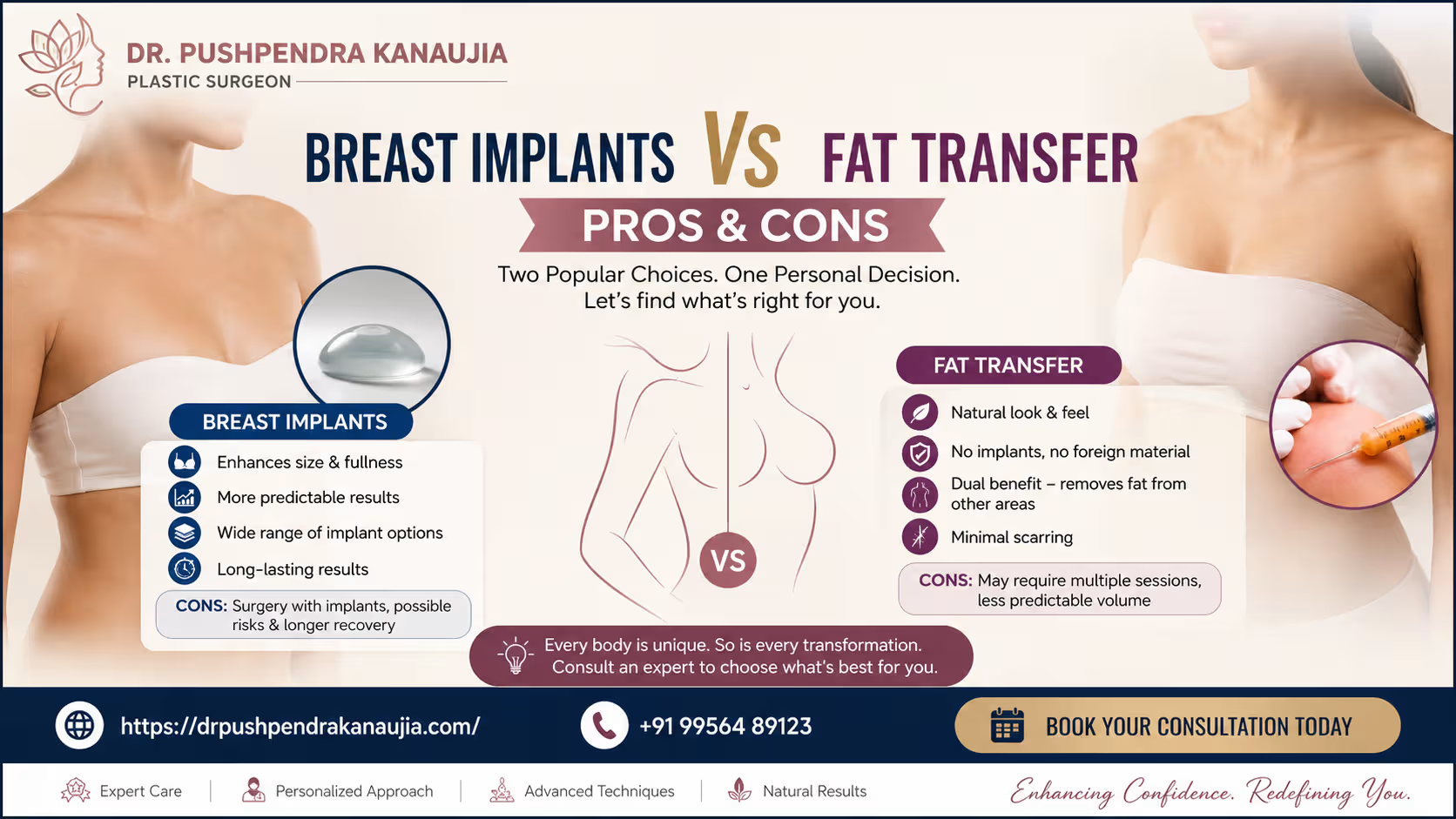
Breast implants use silicone or saline devices to increase breast size and shape, while fat transfer breast augmentation uses fat taken from another part of the body for a more natural enhancement. Implants usually provide more noticeable volume, whereas fat transfer offers softer, natural-looking results with smaller size increases and no foreign materials.
As a specialist in plastic and reconstructive surgery, my goal is to provide patients with an honest, comprehensive look at their options. When a patient visits a Breast implant specialist in Lucknow, they aren’t just looking for a procedure; they are looking for a transformation that aligns with their lifestyle and body type. This guide will explore the differences, the science, and the realities of both breast implants and fat grafting.
What Are Breast Implants?
Breast implants have been the “gold standard” for breast enhancement for decades. They are medical devices designed to be placed under the breast tissue or the chest muscle to increase size, improve shape, and enhance projection.
Silicone vs. Saline
The two most common types of implants are silicone and saline. Silicone implants are filled with a cohesive gel that closely mimics the feel of natural human fat. They are often preferred for their “gummy bear” consistency, which maintains its shape even if the shell is compromised. Saline implants are filled with sterile salt water. While they may require a smaller incision, they can sometimes feel slightly firmer or show ripples in patients with very thin breast tissue.
Customization and Placement
One of the greatest strengths of implants is the level of customization they offer. They come in various shapes (round or teardrop), profiles (how far they project from the chest), and sizes. During a consultation with the Best plastic surgeon in Lucknow, we discuss whether the implant should be placed “over” the muscle or “under” the muscle. Submuscular placement often provides a more natural transition at the top of the breast and may reduce the risk of certain complications.
Implants are ideal for patients who desire a significant increase in volume—for example, moving from an A-cup to a C-cup or D-cup. Because the volume is pre-determined by the device, the results are highly predictable.
What Is Fat Transfer Breast Augmentation?
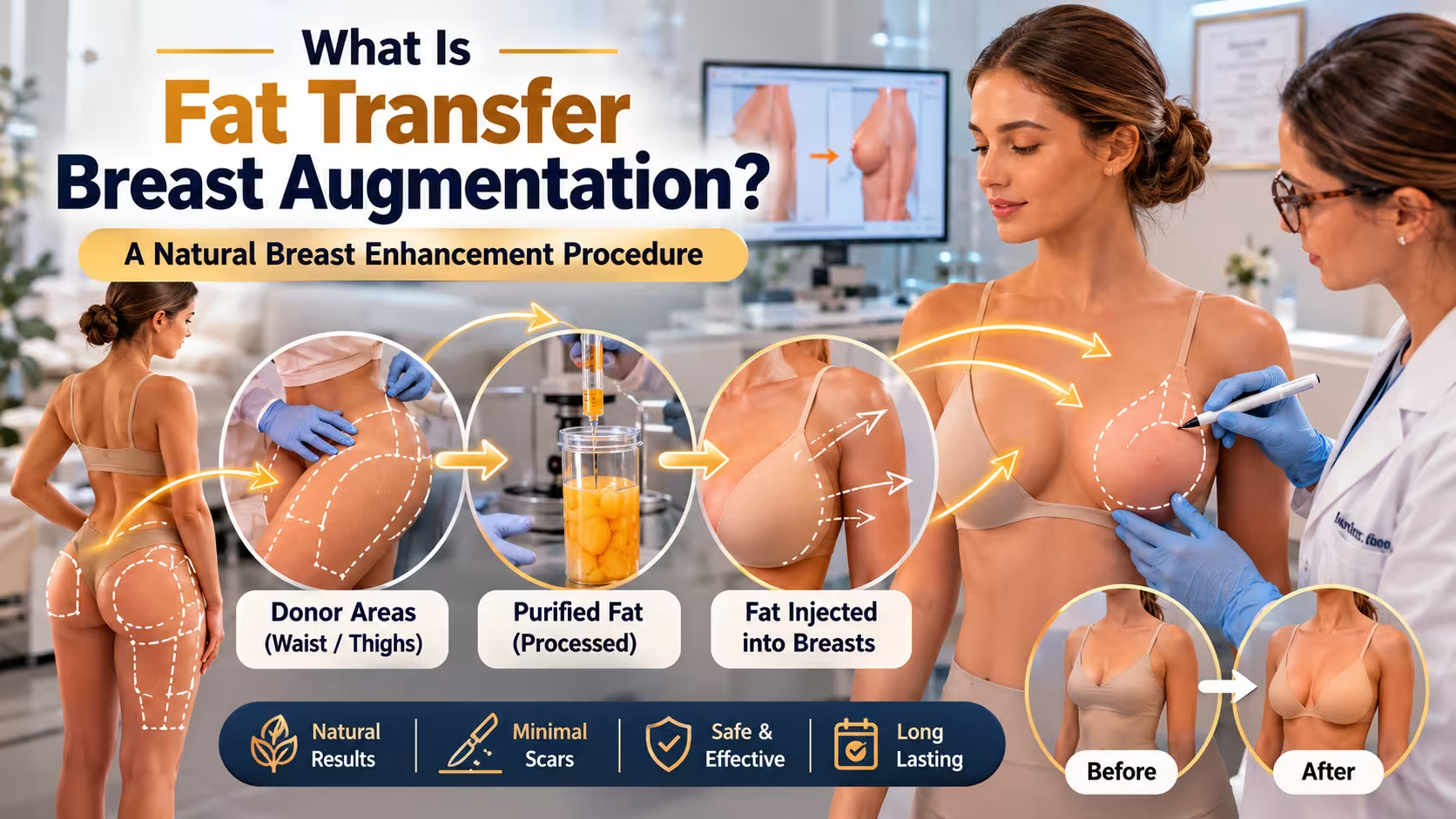
Fat transfer, also known as autologous fat grafting, is a more recent innovation that has gained massive popularity. It is often described as a “two-in-one” procedure because it involves removing unwanted fat from one area of the body and moving it to the breasts.
The Process: Liposuction and Injection
The procedure begins with liposuction. Fat is gently harvested from “donor sites” such as the abdomen, thighs, or flanks. This fat is then processed and purified to isolate healthy, living fat cells. Using specialized cannulas, the surgeon carefully injects this purified fat into the breast tissue in thin layers.
A Natural Approach
Because the procedure uses your own living tissue, there is no risk of an allergic reaction or “rejection” of a foreign object. The result is a breast that feels exactly like natural breast tissue—because it is natural breast tissue.
However, it is important to note that fat transfer is generally for subtle enhancement. It is usually used to increase the breast size by half a cup to one full cup size per session. It is also an excellent tool for correcting minor asymmetries or filling in “hollow” areas without the use of a synthetic device.
Breast Implants — Main Advantages and Limitations
When weighing your options, it is essential to look at the practical “pros and cons” of each method. Implants remain the most popular choice globally for several reasons, but they also come with long-term considerations.
Advantages: The Power of Transformation
The most significant advantage of breast implants is the ability to achieve a dramatic change in a single surgery. If a patient has very little natural breast tissue, an implant provides the structural “base” that fat transfer cannot.
Implants also offer a very predictable shape. If you want a specific “lifted” look or a high-fashion silhouette, implants are designed to provide that exact geometry. Furthermore, the results are immediate. Once the initial post-surgical swelling subsides, the size you see is the size you will keep.
Limitations: Maintenance and Risks
The primary limitation of implants is that they are not “lifetime devices.” While they are incredibly durable, the likelihood of needing a replacement surgery increases as the years go by. Over time, the silicone shell can wear down, or the body can form a firm layer of scar tissue around the implant, a condition known as capsular contracture.
Additionally, implants require a larger incision (usually 3 to 5 centimeters) compared to fat transfer, which leaves a permanent, though well-concealed, scar. Patients must also be comfortable with the idea of having a medical device inside their body and the monitoring that comes with it.
Fat Transfer — Benefits and Possible Drawbacks
Fat transfer appeals to a specific type of patient: someone who wants a “stealth” enhancement and happens to have a little extra fat elsewhere that they’d like to lose.
Benefits: Dual Contouring
The most obvious benefit is liposuction. Many patients find that by slimming their waist or thighs and adding volume to their breasts, their overall body proportions improve significantly.
Another benefit is the lack of long-term “device” risks. There is no risk of rupture, no risk of capsular contracture, and no need for future “implant exchanges.” Once the transferred fat establishes a blood supply in its new home, it stays there permanently, fluctuating naturally with your body weight.
Drawbacks: The “Take” Rate
The main drawback of fat transfer is unpredictability. Not all the fat that is injected will survive. Typically, about 60% to 80% of the transferred fat “takes” and becomes a permanent part of the breast. The rest is naturally absorbed by the body.
Because of this, some patients may require a second or third session to reach their desired volume. Furthermore, if a patient is very thin and has low body fat, they may not be a candidate for this procedure simply because there isn’t enough donor material to harvest.
Which Procedure Looks More Natural?

The word “natural” is subjective in cosmetic surgery. It can refer to how the breast looks, how it feels to the touch, or how it moves when you walk or lie down.
Appearance and Proportions
Fat transfer generally wins in the “natural feel” category. Since it is composed of your own adipose tissue, it has the exact softness and warmth of a natural breast. It also mimics the natural “sloping” shape of a breast perfectly.
However, modern silicone breast implants—especially cohesive gel models—have come a long way. When placed by an experienced surgeon who chooses the right size for the patient’s frame, implants can look incredibly natural. The “fake” look often associated with implants usually happens when the implant is too large for the patient’s chest width or when it is placed too high.
Movement and Elasticity
Natural breasts move. They shift when you lie on your back and bounce slightly when you walk. Fat transfer maintains this movement perfectly. Implants, depending on their placement and the tightness of the skin, may have a more “fixed” appearance, though submuscular placement helps them mimic natural movement more effectively.
Ultimately, the most “natural” result comes from a surgeon who understands body proportions. A Breast surgery specialist in Lucknow will evaluate your skin elasticity and existing tissue to ensure that whichever method you choose, the results look like they belong to your body.
Recovery Time and Healing Differences
The recovery experience for these two surgeries is quite different because they involve different parts of the body.
Implant Recovery: The “Tightness” Phase
With breast implants, the recovery is focused entirely on the chest. For the first few days, patients often describe a feeling of “heaviness” or “tightness,” especially if the implants were placed under the muscle. Most patients can return to a desk job within 5 to 7 days, though heavy lifting and strenuous exercise are restricted for about 6 weeks.
Fat Transfer Recovery: The “Soreness” Phase
Recovery for fat transfer is more complex because it involves multiple sites. While the breasts themselves usually don’t hurt much (they mostly feel swollen), the areas where liposuction was performed (like the abdomen or thighs) will feel like a very intense workout.
You will need to wear a compression garment on the liposuction areas to help the skin heal smoothly. However, the “downtime” is similar—about a week off work. The unique rule for fat transfer is that you must avoid putting any pressure on the breasts for several weeks to ensure the new fat cells get the blood supply they need to survive.
Safety, Risks & Long-Term Maintenance
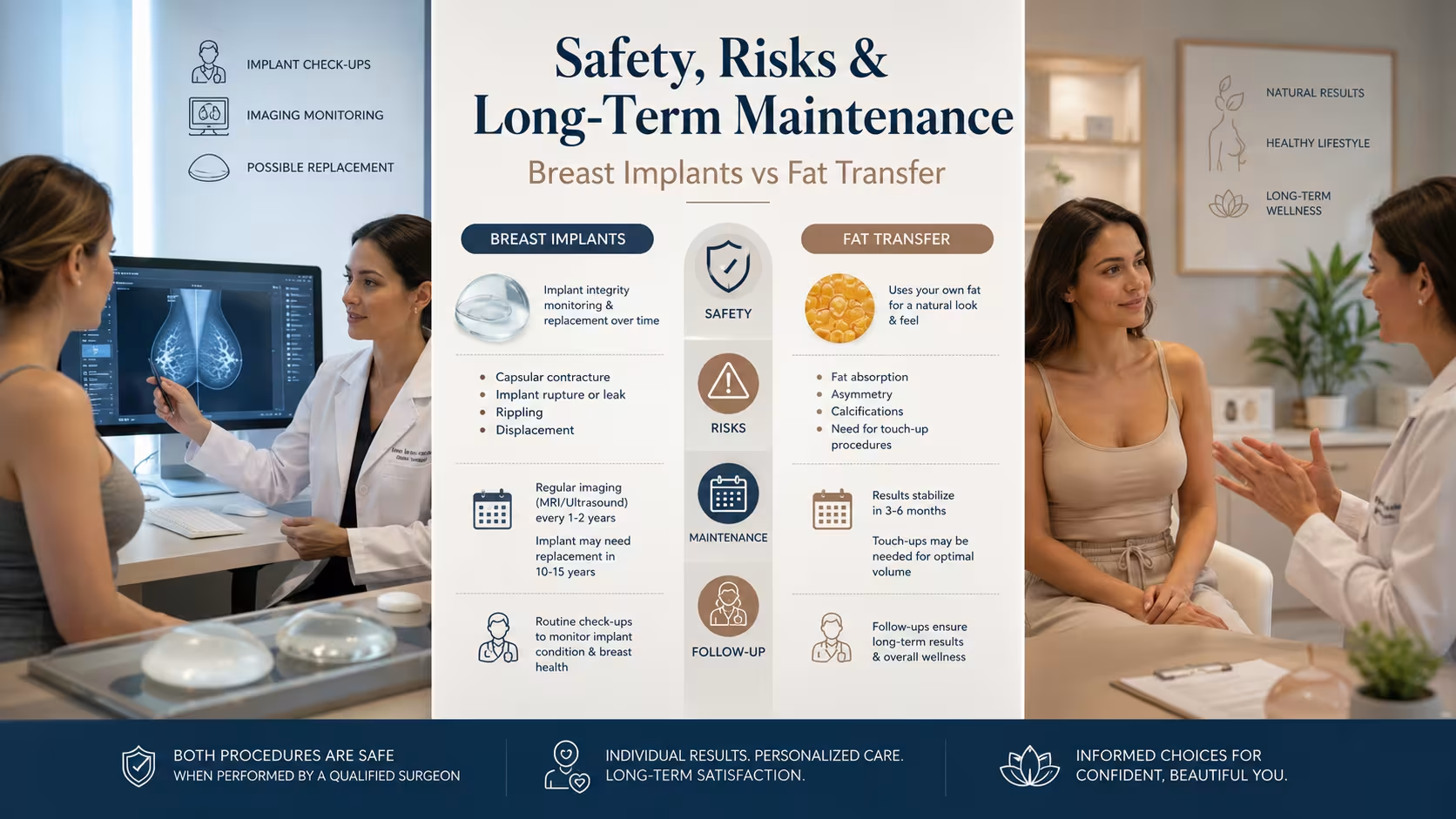
Safety is the foundation of any successful cosmetic procedure. Both implants and fat transfer have excellent safety profiles, but the risks are different.
Risks Associated with Implants
-
Capsular Contracture: This is when the scar tissue around the implant hardens.
-
Rupture: While rare, a silicone or saline shell can leak, requiring replacement.
-
BIA-ALCL: A very rare type of lymphoma associated with textured implants (modern surgeons primarily use smooth implants to mitigate this).
Risks Associated with Fat Transfer
-
Fat Necrosis: If the transferred fat doesn’t get enough blood, it can die and form a small, hard lump. While harmless, these lumps can sometimes be felt.
-
Cysts: Small fluid-filled sacs can form if fat is not absorbed properly.
-
Calcification: Over time, old fat cells can calcify, which might show up on a mammogram. (It is crucial to inform your radiologist that you have had a fat transfer so they can distinguish these from other concerns.
Long-Term Monitoring
Regardless of the choice, regular breast health screenings are vital. For implants, this may eventually include an MRI or ultrasound to check the integrity of the shell. For fat transfer, routine mammograms are usually sufficient.
Who Is a Better Candidate?
Choosing between the two often comes down to your baseline anatomy.
You are likely a better candidate for Breast Implants if:
-
You want to increase your size by two or more cups.
-
You have very little body fat for liposuction.
-
You want a more “rounded” or “lifted” upper pole (the top part of the breast).
-
You have significant sagging (though an implant might need to be paired with a breast lift).
You are likely a better candidate for Fat Transfer if:
-
You only want a subtle, 1-cup increase.
-
You have areas of stubborn fat you want to remove via liposuction.
-
You have good skin elasticity.
-
You prefer a procedure with no synthetic materials or “foreign bodies.”
Patients consulting about breast surgery in Lucknow often undergo a personalized assessment before choosing the ideal breast enhancement procedure. During this consultation, we look at skin quality, tissue thickness, and overall health to ensure the safest path forward.
Cost Factors — What Influences the Final Price?
It is a common misconception that fat transfer is “cheaper” because it doesn’t involve the cost of a medical device. In reality, the costs are often comparable.
Factors for Breast Implants:
-
The cost of the implants themselves (silicone is more expensive than saline).
-
Surgeon’s expertise.
-
Hospital and anesthesia fees.
Factors for Fat Transfer:
-
The complexity of the liposuction (more areas mean more time in surgery).
-
Specialized processing equipment for the fat.
-
The possibility of needing a second session to reach the desired volume.
Because fat transfer involves two surgeries in one (liposuction + injection), the operating room time is often longer than a standard implant surgery. However, the lack of long-term “maintenance” costs (like implant replacement) can make it a cost-effective long-term investment.
A Real-Life Perspective: The Patient Experience
Consider the example of a patient we’ll call “Ananya.” Ananya was a 32-year-old mother who felt that her breasts had “deflated” after breastfeeding. She had a moderate amount of stubborn fat on her hips, but didn’t want a dramatic change—she just wanted her old clothes to fit again. For her, fat transfer was the perfect solution. It provided a subtle volume boost and contoured her waistline, all while using her own tissue.
In contrast, another patient, “Priya,” was naturally very thin with almost no breast tissue. She wanted a clear, curvaceous silhouette. Because she didn’t have enough donor fat and because she wanted a more significant size increase, silicone implants were the better choice. Today, both women are thrilled with their results because their procedures were tailored to their specific bodies.
Final Thoughts
Both breast implants and fat transfer are powerful tools in the hands of a skilled surgeon. There is no “one size fits all” answer. The “better” option depends entirely on your goals, your anatomy, and your comfort with the maintenance of each procedure.
Implants remain the most reliable way to achieve significant volume and a specific shape. Fat transfer remains the ultimate choice for those seeking a natural, “no-trace” enhancement along with the benefits of body contouring.
Consulting experienced cosmetic experts like Dr. Pushpendra Kanaujia can help patients understand which procedure aligns best with their body type and aesthetic expectations. Setting realistic expectations and having an open, honest dialogue with your surgeon is the most important part of the process.
FAQs On Breast Implants vs Fat Transfer
Q.Which is better: breast implants or fat transfer?
Neither is objectively “better”; it depends on your goals. Implants are better for significant volume and predictable shaping. Fat transfer is better for subtle, natural enhancement and uses your own body fat instead of a synthetic device.
Q.Does fat transfer breast augmentation look more natural?
Generally, yes. Because it uses your own fat, the texture, warmth, and movement of the breast are identical to natural tissue. However, modern implants can also look very natural if the size is chosen correctly for your frame.
Q.How long do breast implants last?
Breast implants are not lifetime devices. While many last 10 to 20 years without issue, surgeons generally recommend monitoring them and considering a replacement or removal if any signs of wear or complications arise.
Q.Can fat transfer increase breast size permanently?
Yes. Once the transferred fat establishes a blood supply (usually within 3–6 months), those fat cells are permanent. However, they will grow or shrink if you gain or lose weight, just like the rest of the fat on your body.
Q.Which procedure has faster recovery: implants or fat transfer?
The recovery time is similar (about 1 week for most daily activities), but the type of recovery differs. Implants cause more chest tightness, while fat transfer involves more soreness in the liposuction areas (like the stomach or thighs).
Disclaimer: This article is for educational purposes and does not replace professional medical advice. Always consult with a qualified plastic surgeon to discuss your specific case.
