


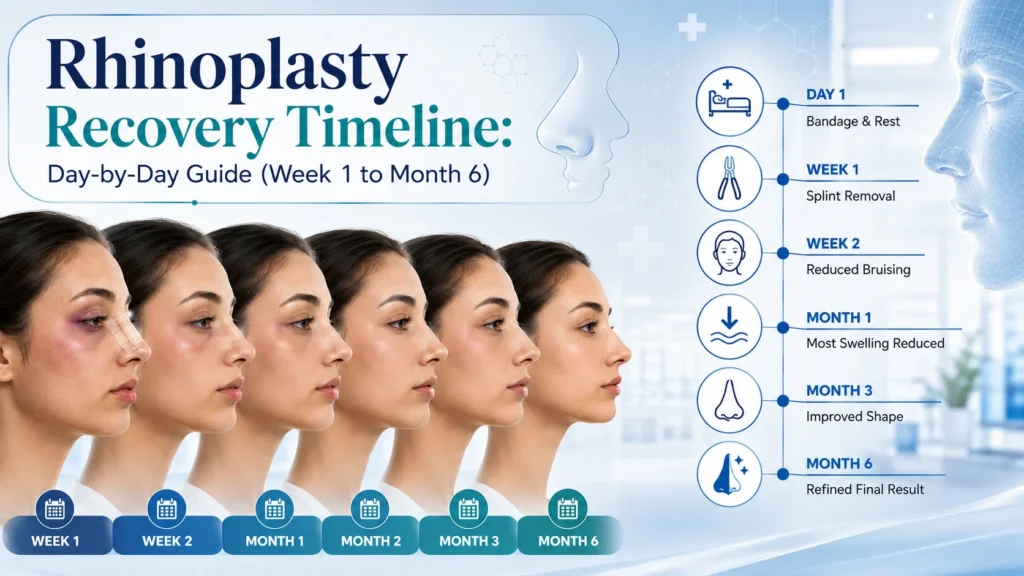
Rhinoplasty recovery typically takes several months, with most swelling reducing within the first month and the final results becoming visible between 9 and 12 months. Following proper post-operative care, attending follow-up appointments, and avoiding strenuous activities help ensure a smooth healing process and optimal surgical outcome.
Many patients focus primarily on the surgery itself, but understanding what happens after the procedure is equally important. Swelling, bruising, gradual healing, and changes in the shape of the nose occur over several months. Knowing what to expect during each stage helps reduce anxiety and allows you to recover with confidence.
This detailed guide explains the rhinoplasty recovery timeline from the first day after surgery through six months, including essential care tips, activity restrictions, and signs of healthy healing.
What Happens Immediately After Rhinoplasty Surgery?
Immediately after surgery, you’ll be moved to a recovery room where medical staff monitor your condition until the effects of anesthesia begin to wear off.
You can expect:
- A nasal splint placed over your nose
- Internal packing or soft splints (in some cases)
- Mild bleeding or drainage
- Swelling around the nose and cheeks
- Bruising under the eyes
- Temporary nasal congestion
Most patients are discharged the same day, although some may stay overnight depending on the complexity of the procedure.
What Should You Expect During the First 24 Hours?
The first day is usually the most uncomfortable part of recovery, but significant pain is uncommon. Most people describe the sensation as pressure rather than severe pain.
During Day 1, you should:
- Keep your head elevated at all times
- Apply cold compresses around the eyes (not directly on the nose)
- Take prescribed medications on schedule
- Stay hydrated
- Eat soft foods
- Rest as much as possible
Avoid bending forward, lifting heavy objects, or blowing your nose.

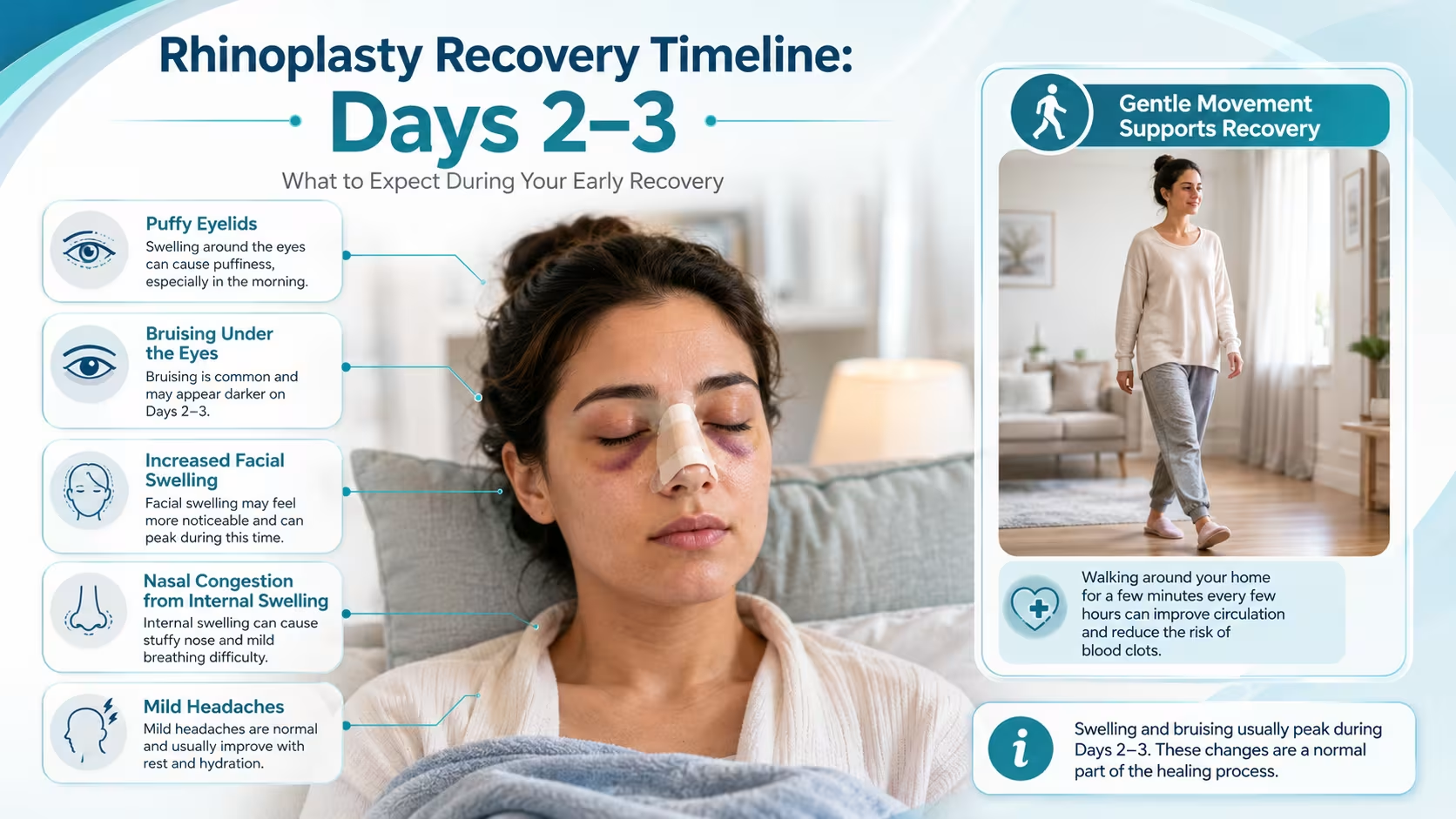
How Does Recovery Progress During Days 2–3?
Swelling and bruising typically peak during the second and third days.
You may notice:
- Puffy eyelids
- Dark bruises beneath the eyes
- Increased facial swelling
- Nasal blockage due to internal swelling
- Mild headaches
Although these symptoms may appear alarming, they are a normal part of healing.
Walking around your home for a few minutes every few hours can improve circulation and reduce the risk of blood clots.
What Happens During Days 4–7?
By the end of the first week, the body begins repairing tissues more rapidly.
Most patients experience:
- Reduced facial swelling
- Less bruising
- Improved comfort
- Better sleep
- Reduced need for pain medication
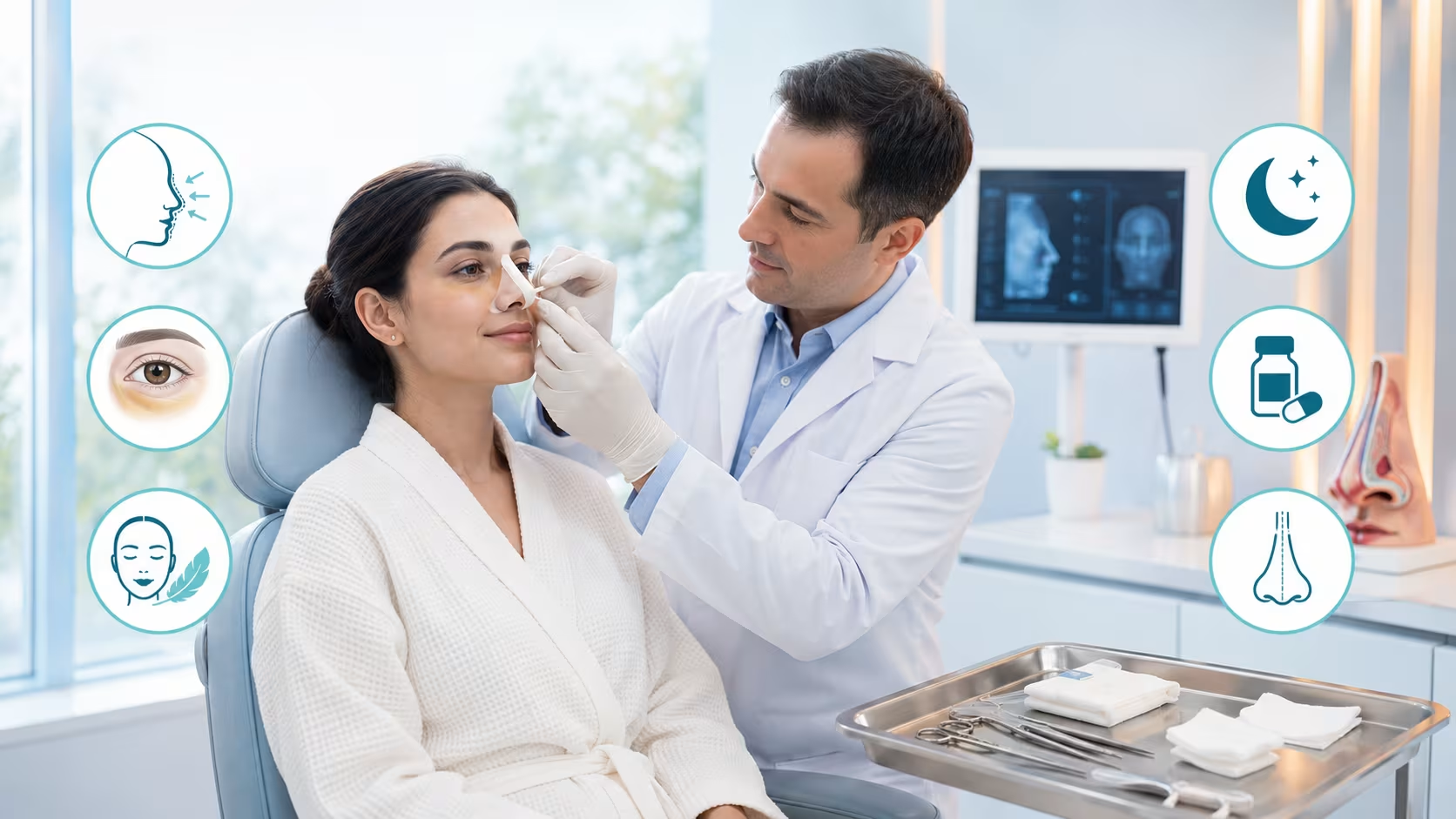
Around Day 7, your surgeon typically removes:
- External splint
- Sutures (if non-dissolvable)
- Nasal dressing
Many patients are surprised by how swollen their nose still appears after splint removal. This is completely normal.
What Should You Expect During Week 2?
Week 2 marks one of the biggest improvements in appearance.
Most bruising fades significantly, allowing many people to return to:
- Office work
- College
- Light daily activities
- Social gatherings
However, the nose still remains swollen, especially around the nasal tip.
Avoid:
- Heavy exercise
- Swimming
- Contact sports
- Wearing heavy glasses directly on the nose
Why Does Swelling Last So Long After Rhinoplasty?
One of the biggest surprises for patients is how long swelling can persist.
Unlike bruising, swelling disappears gradually because:
- Nasal skin is delicate
- Internal tissues require time to heal
- Blood vessels need to stabilize
- Lymphatic drainage improves slowly
The thicker the nasal skin, the longer swelling may take to resolve.
Most swelling decreases within the first month, while subtle swelling can continue improving for up to one year.
What Changes Occur During Weeks 3–4?
During the third and fourth weeks, patients generally feel much more comfortable.
Common improvements include:
- Better breathing
- Reduced stiffness
- Less facial tenderness
- Improved confidence
- Noticeably refined nose shape
Although healing progresses well, the nose remains vulnerable to accidental impact.
Continue protecting your nose from injury and avoid sleeping face down.
Can You Exercise After One Month?
Around four weeks after surgery, many patients receive clearance for light exercise.
Activities usually allowed include:
- Walking
- Stationary cycling
- Gentle yoga (without inverted poses)
- Light stretching
However, you should still avoid:
- Weightlifting
- High-intensity workouts
- Running long distances
- Contact sports
- Activities with risk of facial injury
Always follow your surgeon’s specific recommendations before returning to exercise.
What Happens Between Months 2 and 3?
By the second and third month, recovery enters a more subtle phase.
During this period:
- Around 70–80% of swelling has resolved.
- Nasal definition becomes more visible.
- The bridge appears smoother.
- Breathing continues improving.
- Internal tissues strengthen.
Patients often begin appreciating the improvements in both appearance and function.
However, the nasal tip may still look slightly rounded due to residual swelling.
Why Does the Tip of the Nose Heal More Slowly?
The nasal tip contains delicate cartilage and soft tissue that naturally retain swelling longer than the bridge.
Factors affecting tip recovery include:
- Skin thickness
- Surgical technique
- Individual healing response
- Revision surgery
- Cartilage grafting
This explains why patients sometimes feel their nose looks different from week to week.
Patience is essential during this phase.
What Should You Expect Between Months 4 and 6?
By months four through six, most patients enjoy significant improvements.
During this period:
- Swelling becomes minimal.
- Nasal contours appear more refined.
- Scars continue fading.
- Internal healing progresses.
- Breathing usually feels normal.
Most people feel confident taking photographs without noticing obvious signs of surgery.
Although healing appears complete externally, microscopic tissue remodeling continues beneath the skin.
When Will You See the Final Rhinoplasty Results?
This is one of the most frequently asked questions.
General recovery milestones include:
| Recovery Stage | Timeline |
|---|---|
| Bruising improves | 1–2 weeks |
| Most swelling reduces | 1 month |
| 70–80% healing | 2–3 months |
| Nose becomes more refined | 4–6 months |
| Final results | 9–12 months |
Patients with thicker skin may require even longer before seeing their final outcome.
How Can You Speed Up Rhinoplasty Recovery?
While healing cannot be rushed, healthy habits can support a smoother recovery.
Helpful recovery tips include:
- Sleep with your head elevated.
- Stay hydrated.
- Avoid smoking and alcohol.
- Eat protein-rich foods.
- Limit salty meals.
- Protect your nose from sunlight.
- Avoid wearing heavy glasses until advised.
- Attend all follow-up appointments.
- Follow medication instructions carefully.
- Avoid touching or pressing your nose unnecessarily.
Consistency with post-operative care often leads to better long-term results.
Which Symptoms Are Normal During Recovery?
Many temporary symptoms are expected during healing.
These include:
- Mild bleeding
- Nasal congestion
- Swelling
- Bruising
- Temporary numbness
- Stiffness
- Reduced sense of smell
- Tenderness around the nose
These symptoms generally improve gradually over several weeks.
When Should You Contact Your Surgeon?
Although complications are uncommon, seek medical attention if you experience:
- Heavy bleeding
- High fever
- Severe pain not relieved by medication
- Sudden increase in swelling
- Difficulty breathing
- Persistent foul-smelling discharge
- Signs of infection
Prompt evaluation helps prevent more serious problems.
Does Everyone Recover at the Same Rate?
No.
Recovery varies depending on several factors, including:
- Age
- Overall health
- Skin thickness
- Surgical complexity
- Whether it was a primary or revision rhinoplasty
- Following post-operative instructions
Some people recover quickly, while others notice gradual improvements over many months.
Comparing your recovery with someone else’s is not recommended.
Conclusion
Recovering from rhinoplasty is a gradual journey rather than an overnight transformation. While bruising and discomfort improve within the first few weeks, the final shape of the nose continues to refine over several months as swelling subsides and tissues heal naturally. Following your surgeon’s instructions, maintaining patience, and attending regular follow-up visits are essential for achieving the best outcome.
If you are considering Rhinoplasty in Lucknow, consulting an experienced plastic surgeon is the first step toward safe treatment and natural-looking results. Dr. Pushpendra Kanaujia offers personalized evaluation, advanced surgical techniques, and comprehensive post-operative guidance to help patients achieve both functional and aesthetic improvements with confidence.
Frequently Asked Questions (FAQs)
1. How long does it take to recover from rhinoplasty?
Most patients recover enough to resume daily activities within 1–2 weeks. However, complete healing and final results may take 9–12 months.
2. When will the swelling completely disappear?
Around 70–80% of swelling resolves within 2–3 months, while the remaining subtle swelling gradually improves over the following months.
3. Can I wear glasses after rhinoplasty?
Heavy glasses should generally be avoided for several weeks because they can place pressure on the healing nasal bones. Your surgeon will advise when it is safe to resume wearing them.
4. When can I return to the gym after rhinoplasty?
Light exercise is often allowed after about four weeks, while strenuous workouts and contact sports usually require additional healing time based on your surgeon’s recommendations.
5. Is it normal for the nose to look uneven during recovery?
Yes. Temporary swelling can make one side of the nose appear different from the other. As healing progresses, the swelling gradually subsides and the nose becomes more symmetrical.
