


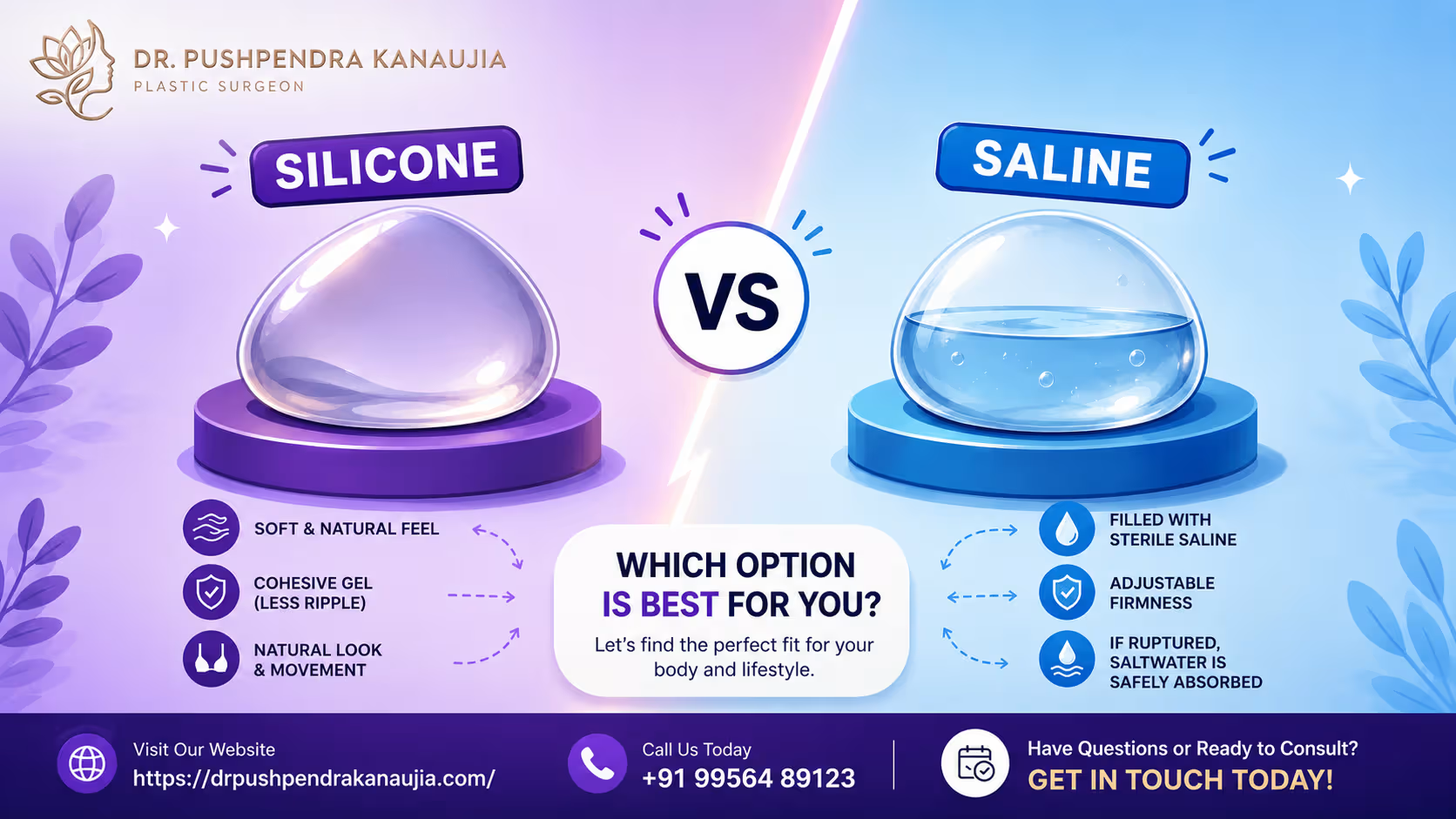
Deciding to undergo breast augmentation is a life-changing journey. For many women, the primary goal isn’t just to increase size, but to enhance their silhouette while maintaining a look and feel that reflects their natural beauty. When you begin your research, you will inevitably face the “big debate”: Silicone vs Saline Breast Implants.
Which one looks more natural? Which one feels more like real breast tissue? Are there safety differences you should worry about?
This comprehensive guide is designed to help you navigate these questions. We will delve into the science, the aesthetics, and the surgical nuances of both implant types. With expert insights from Dr. Pushpendra Kanaujia, recognized as the Best Plastic & Cosmetic Surgeon in Lucknow, we aim to empower you with the knowledge needed to make a confident, informed decision for your body.
“Silicone breast implants generally provide a softer and more natural feel, mimicking real breast tissue, while saline implants offer adjustable sizing and easier rupture detection. The ideal choice depends on your existing breast tissue, body type, and aesthetic goals.”
What Are Breast Implants, and Why Do People Choose Them?
Breast implants are medical prostheses used to change the size, shape, and contour of a person’s breasts. While they are most commonly associated with cosmetic breast augmentation, they play a vital role in reconstructive surgery as well.
The Purpose of Augmentation
Women choose breast implants for various reasons, including:
-
Aesthetic Enhancement: Increasing the volume of naturally small breasts (micromastia).
-
Restoring Volume: Addressing breast “deflation” caused by pregnancy, breastfeeding, or significant weight loss.
-
Symmetry: Correcting instances where one breast is significantly different in size or shape than the other.
-
Reconstruction: Restoring the breast shape following a mastectomy or lumpectomy due to breast cancer.
-
Confidence and Self-Image: For many, the procedure provides a psychological boost, helping them feel more proportionate and comfortable in their clothing.
Modern plastic surgery focuses on “body contouring goals.” It’s no longer about simply being “bigger”; it’s about harmony. Choosing between silicone and saline is the first step in achieving that balance.
Silicone Breast Implants: What You Need to Know
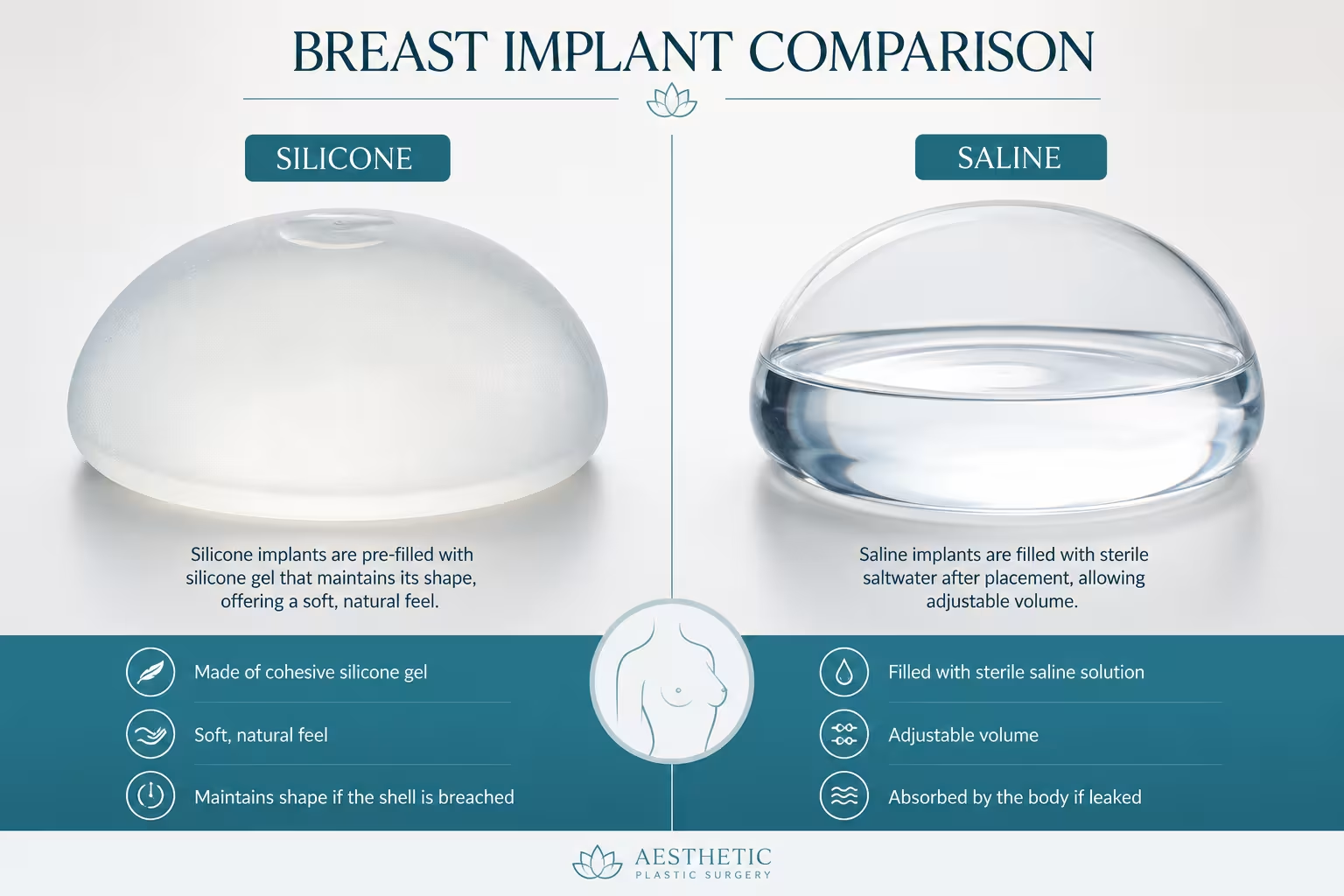
Silicone implants have been the “gold standard” for a natural feel for decades. They consist of a silicone outer shell filled with a cohesive silicone gel.
How They Work
Silicone gel is a thick, viscous material. In modern “form-stable” or “gummy bear” implants, the gel is highly cohesive, meaning it holds its shape even if the shell is cut. This mimics the density and movement of natural fat and glandular tissue.
Why People Choose Silicone
-
The “Real” Feel: Silicone is widely considered the closest match to natural breast tissue.
-
Reduced Rippling: Because the gel is thick, it is less likely to “wrinkle” or ripple under the skin, which is a common concern for thinner patients.
-
Lightweight Options: Newer generations of silicone are designed to be lighter, reducing the strain on breast skin over time.
What to Keep in Mind
-
Rupture Detection: If a silicone implant ruptures, it is often a “silent rupture,” meaning the gel stays within the shell or the surrounding scar tissue (capsule). Regular imaging (MRI or Ultrasound) is recommended to monitor them.
-
Cost: Silicone implants are generally more expensive than saline.
-
Age Requirement: For cosmetic use, the FDA recommends silicone implants for women aged 22 and older.
Saline Breast Implants: What You Need to Know
Saline implants have been a popular choice due to their long safety record and the flexibility they offer during surgery.
How They Work
A saline implant consists of a silicone shell that is inserted into the breast pocket while empty (deflated). Once positioned, the surgeon fills it with sterile saltwater (saline) through a small tube.
Why People Choose Saline
-
Smaller Incisions: Because they are filled after insertion, the incision required is significantly smaller than that for a pre-filled silicone implant.
-
Instant Rupture Detection: If a saline implant leaks, it deflates quickly (like a balloon). The saltwater is safely absorbed by the body, making the issue immediately obvious.
-
Adjustability: Surgeons can fine-tune the volume during the operation to achieve better symmetry.
What to Keep in Mind
-
The “Firm” Feel: Saline can feel firmer and more like a water balloon than natural tissue.
-
Rippling: In patients with very little natural breast tissue, the edges of a saline implant may be visible or palpable (rippling).
-
Age Requirement: Saline implants are FDA-approved for cosmetic augmentation in women aged 18 and older.
Side-by-Side: Key Differences Between Silicone and Saline Implants
Choosing the right implant requires comparing their physical properties and maintenance needs.
Feel and Texture
Silicone is soft and mimics human fat. Saline is firmer and may have more “bounce” or surface tension.
Appearance
Silicone typically provides a smoother transition at the top of the breast. Saline can sometimes look rounder or more “obvious,” depending on the patient’s skin thickness.
Incision Size
Saline requires a 2–3 cm incision. Silicone requires a 4–5 cm incision to accommodate the pre-filled gel.
Rupture Detection
Saline: Visual deflation. Silicone: Usually requires an MRI or high-resolution ultrasound.
Monitoring Requirements
Silicone requires periodic imaging to ensure the integrity of the shell. Saline requires only regular physical exams.
Comparison Chart: Silicone vs Saline
| Feature | Silicone | Saline |
| Feel | Soft, mimics natural tissue | Firmer, like a water balloon |
| Appearance | Very natural, less rippling | Can look rounder; potential rippling |
| Incision Size | Larger (4-5 cm) | Smaller (2-3 cm) |
| Cost | Higher | Lower |
| Rupture Detection | Silent (Requires Imaging) | Instant (Visible Deflation) |
| Maintenance | Periodic MRI/Ultrasound | Regular physical exams |
| FDA Age Limit | 22+ (for cosmetic) | 18+ (for cosmetic) |
Which Type Looks More Natural?
This is the most common question asked during consultations. The answer depends on your “starting point”—your anatomy.
Soft Tissue Coverage
If you have a moderate amount of natural breast tissue, both silicone and saline can look natural. However, if you are very thin with little breast fat (low soft tissue coverage), silicone is the clear winner. Its cohesive gel prevents the “scalloping” or rippling effect often seen with saline.
Body Frame Considerations
For a petite frame, silicone often blends more seamlessly into the chest wall. For a woman with a wider frame or more existing tissue, the firmness of saline may be masked effectively.
Implant Shape and Profile
-
Round Implants: Good for “upper pole” fullness (cleavage).
-
Anatomic (Teardrop) Implants: Usually made of silicone, these mimic the natural slope of a breast.
Expert Verdict: While Dr. Pushpendra Kanaujia emphasizes that modern surgical techniques can make saline look excellent, silicone is scientifically engineered to provide the most natural look and feel in the majority of cases.
Implant Placement: Above or Below the Muscle?
Where the implant is placed is just as important as what it is made of.
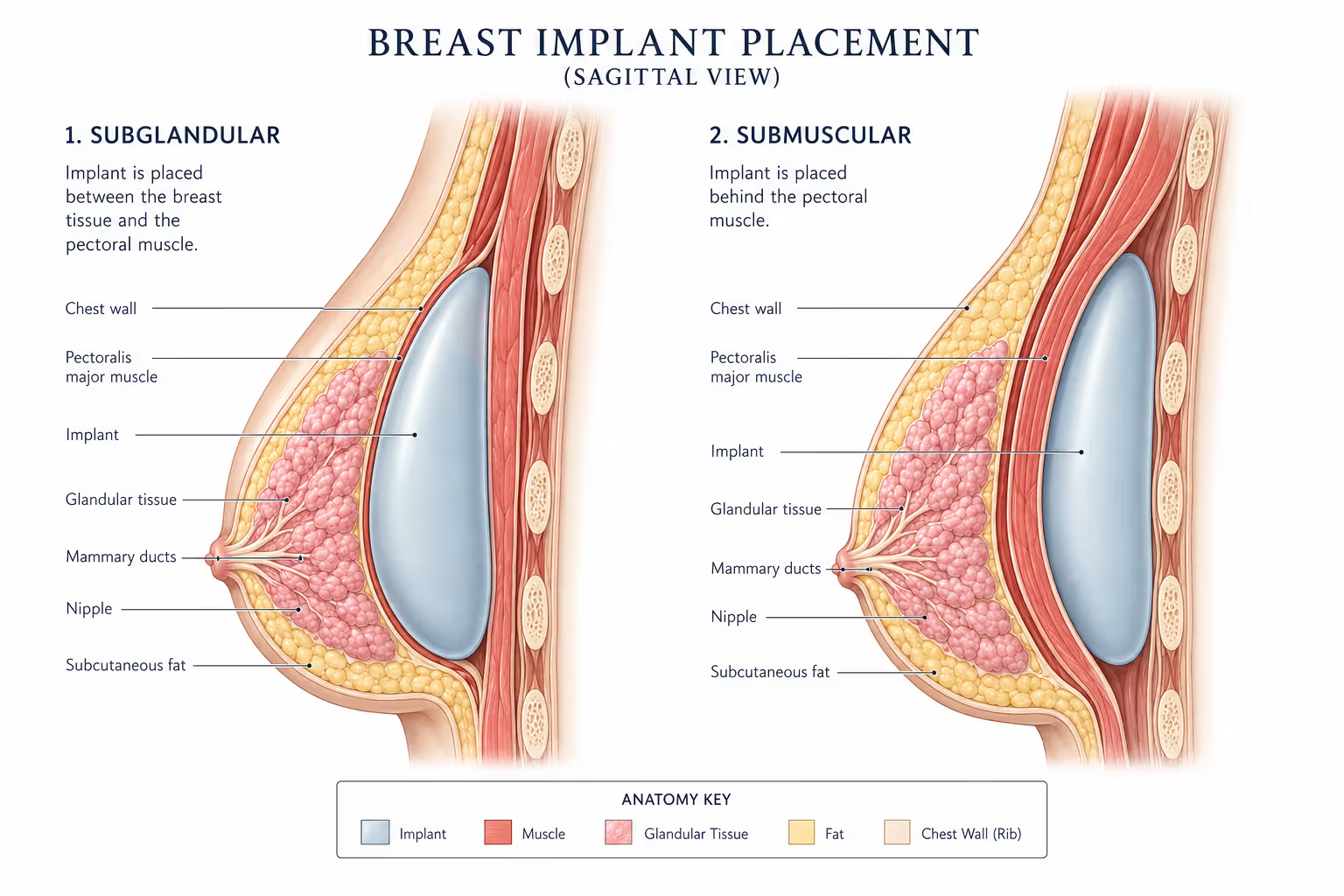
Subglandular Placement (Above the Muscle)
The implant is placed directly behind the breast tissue and in front of the pectoral muscle.
-
Pros: Shorter recovery, less discomfort, no “animation deformity” (movement of the implant when flexing muscles).
-
Cons: Higher risk of visible rippling and capsular contracture.
Submuscular Placement (Below the Muscle)
The implant is placed partially or fully under the pectoralis major muscle.
-
Pros: Provides an extra layer of “padding,” which makes the implant look much more natural, especially at the top. Lower risk of capsular contracture.
-
Cons: Slightly longer and more painful recovery; implants may move slightly when you exercise the chest muscles.
Who Is a Good Candidate for Breast Augmentation Surgery?
Not everyone is an immediate candidate for surgery. Dr. Pushpendra Kanaujia, the Best Plastic & Cosmetic Surgeon in Lucknow, evaluates patients based on:
-
Physical Eligibility: You should be in good overall health with no active infections or untreated breast cancer.
-
Age Considerations: 18+ for saline, 22+ for silicone (for cosmetic purposes).
-
Non-Smokers: Smoking significantly impairs healing and increases the risk of complications.
-
Realistic Expectations: Understanding that surgery improves your appearance but won’t result in “perfection” or solve underlying emotional issues.
Breast Implant Size Guide: How to Choose the Right Size
Size is measured in Cubic Centimeters (CCs), not bra cup sizes.
Small Implants (150cc – 250cc)
Ideal for subtle enhancement, correcting minor asymmetry, or a very “athletic” look.
Medium Implants (300cc – 400cc)
The most popular range. It provides a noticeable increase (usually 1.5 to 2 cup sizes) while staying within the natural footprint of most women’s breasts.
Large Implants (450cc+)
For those desiring a dramatic “glamour” look. Note that larger implants carry a higher risk of sagging (ptosis) over time due to weight.
Sizing Comparison Chart
| Range | Typical Result | Best For |
| 200cc | Subtle lift | Petite frames, athletic lifestyle |
| 350cc | Classic “Full” look | Most body types; restores volume |
| 500cc | Dramatic volume | Patients with wide chest walls |
Safety: Are Breast Implants Safe?
Breast implants are among the most studied medical devices in the world.
-
FDA Approval: Both silicone and saline implants are FDA-approved and undergo rigorous testing.
-
Capsular Contracture: This occurs when the scar tissue around the implant hardens. Modern textured or smooth implants and proper surgical technique (like those used by a breast augmentation specialist) minimize this risk.
-
BIA-ALCL: This is a rare type of lymphoma associated with specific textured implants. Surgeons today largely prefer smooth implants to mitigate this risk.
-
Breast Implant Illness (BII): While not a formal medical diagnosis, some women report systemic symptoms (fatigue, joint pain). A consultation with an expert like Dr. Pushpendra Kanaujia is essential to discuss these concerns.
Cost of Silicone vs Saline Breast Implants in India
The cost of breast augmentation in India is highly competitive while offering world-class medical standards.
| Cost Factor | Silicone | Saline |
| Implant Cost | Higher (Imported brands like Motiva/Mentor) | Lower |
| Surgery Cost | Standard | Standard |
| Follow-Up | Higher (Due to imaging) | Lower |
| Maintenance | Periodic Monitoring | Minimal |
In Lucknow, the total cost depends on the surgeon’s expertise and the hospital facility. Choosing the Best Plastic & Cosmetic Surgeon in Lucknow ensures you are paying for safety and aesthetic precision, not just the device.
Recovery: What to Expect After Surgery
Recovery is a gradual process.
-
First Week: Expect soreness, swelling, and bruising. You will wear a surgical bra 24/7.
-
Return to Work: Most patients return to desk jobs within 5–7 days.
-
Exercise: No heavy lifting or vigorous cardio for 4–6 weeks.
-
Scar Care: Scars usually fade significantly over 12 months.
How Long Do Breast Implants Last?
Breast implants are not lifetime devices.
Most manufacturers provide a 10-year warranty, but many implants last 15–20 years without issue. However, you should expect to have a “maintenance” surgery at some point in your life to replace or remove them.
Breast Implant Revision Surgery: When Is It Needed?
Revision may be necessary if:
-
Rupture occurs.
-
Capsular contracture develops (hardening).
-
Malposition: The implant shifts (bottoming out or “double bubble”).
-
Aesthetic change: You want a different size or have experienced post-pregnancy sagging.
Latest Advances in Breast Implant Technology (2026)
As we move into 2026, technology has made implants safer than ever:
-
Gummy Bear Implants: High-strength cohesive gels that maintain shape even if the shell is compromised.
-
Ergonomic Implants: Silicone implants that shift their shape based on gravity—becoming round when lying down and teardrop-shaped when standing.
-
Micro-transponders (RFID): Some implants now contain a tiny chip that can be scanned externally to identify the implant’s serial number and volume without surgery.
Choosing the Right Implant for Your Body and Goals
Consider Silicone If:
-
You want the most natural feel possible.
-
You have very little natural breast tissue.
-
You are concerned about visible rippling.
Consider Saline If:
-
You want a smaller incision/scar.
-
You want the peace of mind of “instant” leak detection.
-
You are on a stricter budget.
Questions to Ask Your Plastic Surgeon Before Surgery
-
Are you board-certified in Plastic Surgery?
-
Which implant brand do you use and why?
-
Which placement (above or below the muscle) do you recommend for my body?
-
What is your complication rate for capsular contracture?
-
Can I see “Before and After” photos of patients with similar anatomy to mine?
Common Myths and Facts About Breast Implants
Myth 1: Breast Implants Last Forever
Fact: They are durable, but they will likely need replacement due to wear and tear or aging of the breast tissue.
Myth 2: Silicone Implants Are Dangerous
Fact: Extensive studies have shown no link between silicone implants and autoimmune diseases. Modern cohesive gels are extremely safe.
Myth 3: Breastfeeding Is Impossible
Fact: Most women with implants can breastfeed successfully, especially if the incision is made in the crease under the breast (inframammary fold).
Myth 4: Bigger Is Always Better
Fact: Implants that are too large for your frame can cause back pain, tissue thinning, and premature sagging.
Myth 5: Implants Always Look Fake
Fact: With submuscular placement and high-quality silicone implants, it is often impossible to tell a woman has had surgery.
Why Consultation Is the Most Important Step
The internet can provide data, but only a surgeon can provide a diagnosis. During a consultation with Dr. Pushpendra Kanaujia, the Best Plastic & Cosmetic Surgeon in Lucknow, your anatomy is evaluated using professional measurements.
During Your Consultation, Your Surgeon Will:
-
Evaluate anatomy: Chest wall width, skin elasticity, and nipple position.
-
Discuss goals: Are you looking for “cleavage” or a “natural slope”?
-
Perform Sizing: Using “sizers” in a bra to help you visualize different volumes.
-
Explain risks: A transparent discussion on the potential for revision.
-
Develop a personalized treatment plan: Tailoring the approach to your lifestyle (e.g., if you are an athlete or a yoga enthusiast).
Final Thoughts
There is no “best” implant—only the best implant for you. Silicone offers an unparalleled natural feel, while saline offers simplicity and safety through visibility.
Achieving a natural result depends 30% on the implant and 70% on the skill of your surgeon. By choosing an expert like Dr. Pushpendra Kanaujia, you ensure that your augmentation is handled with the highest level of medical precision and aesthetic artistry.
FAQs
Q.Which breast implants look the most natural?
Silicone implants generally look more natural because the gel mimics the movement and “give” of human fat. Anatomic (teardrop) silicone implants are the most natural-looking shape.
Q.Are silicone implants better than saline implants?
“Better” is subjective. Silicone is better for feel and aesthetics in thin patients; saline is better for those who want smaller scars and easy leak detection.
Q.How long do breast implants last?
They typically last 10 to 20 years. They are not considered lifetime devices.
Q.Can breast implants rupture?
Yes, both can rupture. Saline implants deflate visibly; silicone ruptures are usually “silent” and require an ultrasound or MRI to detect.
Q.Which implant feels softer?
Silicone implants are significantly softer and feel more like real breast tissue compared to the firmer feel of saline.
Q.Is breast implant surgery painful?
There is discomfort for the first 3–5 days, often described as a “heavy” or “tight” feeling in the chest. Pain is managed effectively with medication.
Q.Can I breastfeed after breast augmentation?
In most cases, yes. The ability to breastfeed is usually preserved, especially with submuscular placement and inframammary incisions.
Q.Do implants need replacement?
Only if a complication arises (like rupture or contracture) or if the patient desires a change in size or appearance.
Q.What is the safest breast implant option?
Both are FDA-approved and safe. Saline is often perceived as “safer” because the filling is just saltwater, but modern silicone gel is inert and highly stable.
Q.How do I choose the right implant size?
Size should be chosen based on your chest width and breast base diameter. Your surgeon will use “sizers” to help you find a volume that balances your frame.
CTA
Choosing between silicone and saline breast implants is a personal decision that should be based on your anatomy, lifestyle, aesthetic goals, and long-term expectations.
For expert guidance and personalized treatment planning, consult Dr. Pushpendra Kanaujia, a trusted Best Plastic & Cosmetic Surgeon in Lucknow, to determine the most suitable implant option for achieving safe, natural-looking results.
Schedule your consultation today and take the first step toward the silhouette you’ve always desired.
