
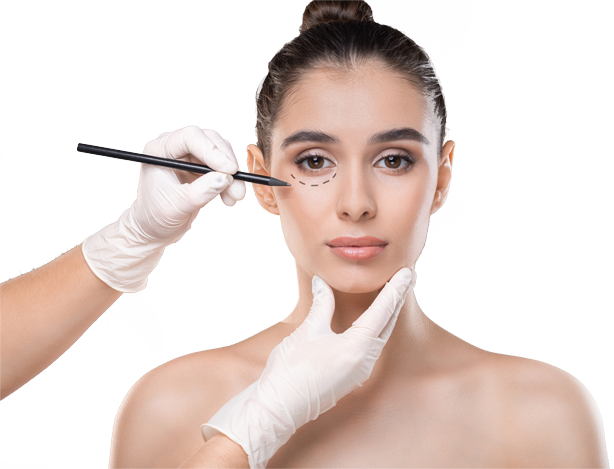


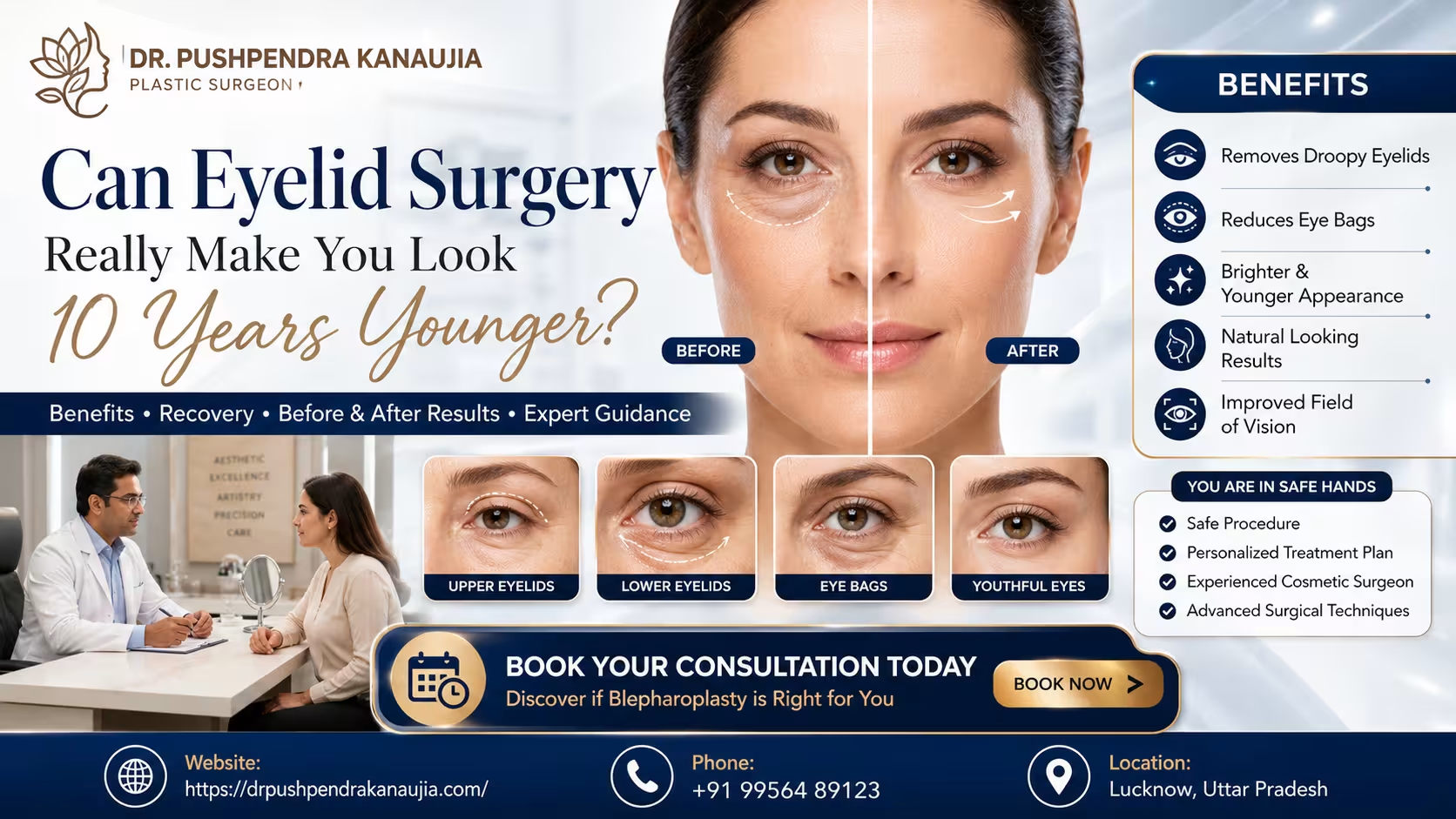
The eyes are often described as the “windows to the soul,” but they are also the first area of the face to show signs of aging. Whether it is the heavy, drooping skin of the upper lids or the persistent puffiness of under-eye bags, these changes can make you look tired, angry, or significantly older than you feel.
Blepharoplasty, also known as eyelid surgery, removes excess skin and fat around the eyes to create a fresher, more youthful appearance. While results can be dramatic—often making patients look up to a decade younger—outcomes vary depending on age, skin quality, and facial anatomy.
In this comprehensive guide, we will explore everything you need to know about blepharoplasty, from the surgical techniques used to the recovery process and the realistic results you can expect.
What Is Blepharoplasty (Eyelid Surgery)?
Blepharoplasty is a specialized surgical procedure designed to improve the appearance of the eyelids. As we age, the muscles supporting the eyelids weaken, and the skin begins to stretch. Consequently, fat may gather above and below your eyelids, causing sagging eyebrows, drooping upper lids, and prominent bags under your eyes.
Cosmetic vs. Functional Blepharoplasty
While most people seek eyelid surgery for aesthetic reasons (Cosmetic Blepharoplasty), it is also performed for medical reasons (Functional Blepharoplasty).
-
Cosmetic Blepharoplasty: Focuses on rejuvenating the face by removing “hooding” on the upper lids or reducing the “tired” look caused by lower lid bags.
-
Functional Blepharoplasty: Occurs when sagging skin from the upper eyelid hangs low enough to impair peripheral vision. In these cases, the surgery is medically necessary to restore a clear field of vision.
The Three Main Approaches
-
Upper Eyelid Surgery: Focuses on removing excess skin and fat from the top lid.
-
Lower Eyelid Surgery: Primarily addresses “bags” and puffiness under the eyes.
-
Combination Procedures: Many patients choose to have both done simultaneously for a complete facial refresh.
Why Do Eyes Make Us Look Older?
Understanding why the eyes age so rapidly helps in understanding why blepharoplasty is such an effective solution. The skin around the eyes is the thinnest on the entire body, making it susceptible to various changes:
-
Skin Laxity: Over time, collagen and elastin production slow down. This leads to “crepy” skin and folds.
-
Fat Herniation: The fat that naturally cushions the eyeball is held in place by a thin membrane. When this membrane weakens, the fat pushes forward, creating “puffiness.”
-
Volume Loss: Conversely, some people lose fat in the “tear trough” area (the semi-circle under the eye), leading to a hollowed, dark, and skeletal look.
-
Ptosis: This is the medical term for a drooping upper eyelid caused by muscle weakness or nerve damage, which creates a perpetually “sleepy” look.
Can Blepharoplasty Really Make You Look 10 Years Younger?
The “10 years younger” claim is a common benchmark in the world of cosmetic surgery. But is it scientifically grounded?
The Rejuvenation Effect
Blepharoplasty is uniquely powerful because it addresses the focal point of human interaction: the eyes. By removing the “hooded” skin that masks the eyes, the face appears more “open” and alert. By smoothing the transition between the lower lid and the cheek, the face loses the “fatigued” shadow that often mimics deep wrinkles.
Realistic Outcomes
While a well-performed blepharoplasty can indeed subtract a decade from your perceived age, it is important to maintain realistic expectations:
-
It does not stop aging: Your skin will continue to age naturally after the procedure.
-
It doesn’t fix everything: Blepharoplasty will not eliminate “crow’s feet” (wrinkles at the corner of the eyes) or lift sagging eyebrows. For those concerns, a surgeon might recommend Botox or a brow lift in conjunction with eyelid surgery.
-
Natural look is key: The goal of a modern surgeon like Dr. Pushpendra Kanaujia, often regarded as the Best Plastic Surgeon in Lucknow, is not to change your look, but to restore the version of you from ten years ago.
Signs You May Be a Good Candidate for Eyelid Surgery
Not everyone with a wrinkle is a candidate for surgery. You might consider blepharoplasty if you notice the following:
-
Upper Lid Hooding: You have so much excess skin on your upper eyelid that it hides your natural crease or even rests on your eyelashes.
-
Difficulty Applying Makeup: Eye shadow and eyeliner get “lost” in the folds of skin.
-
Chronic Puffiness: You have bags under your eyes that don’t go away with sleep, hydration, or expensive creams.
-
Hollow Under-Eyes: You have deep circles that make you look perpetually exhausted.
-
Vision Obstruction: You find yourself constantly lifting your eyebrows to see better.
-
Overall Good Health: Candidates should be non-smokers (or willing to quit) and have no serious eye conditions like glaucoma or severe dry eye.
Types of Blepharoplasty Procedures
Upper Eyelid Blepharoplasty
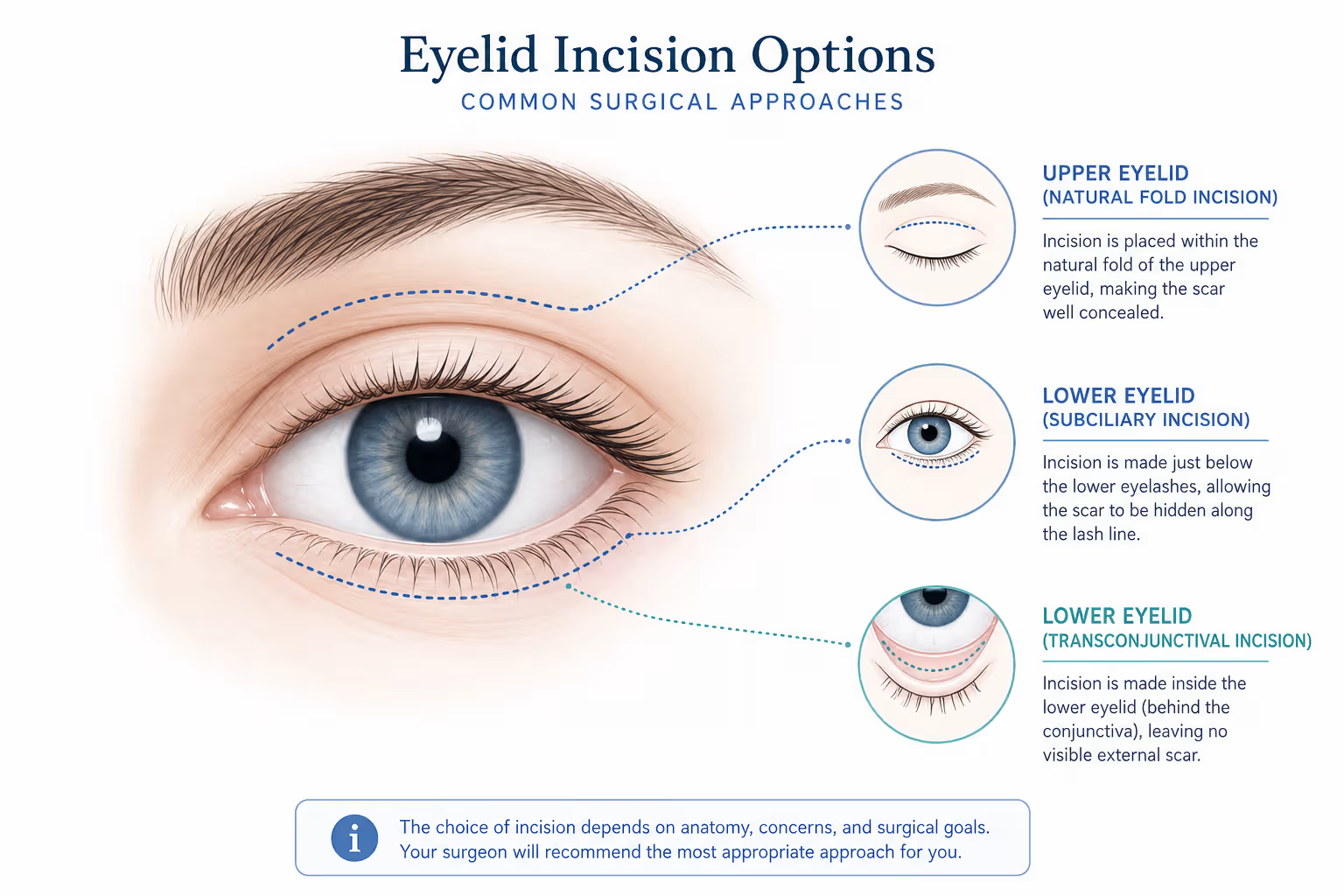
This procedure involves an incision hidden within the natural fold of the upper lid. The surgeon removes excess skin, muscle, and sometimes fat. This “opens” the eye and creates a more defined eyelid platform.
Lower Eyelid Blepharoplasty
There are two main techniques for the lower lid:
-
Transconjunctival Incision: The incision is made inside the lower lid, leaving no visible scar. This is ideal for younger patients who have puffiness but good skin elasticity.
-
Subciliary Incision: The incision is made just below the lash line. This allows the surgeon to remove excess skin as well as fat.
Asian Blepharoplasty (Double Eyelid Surgery)
This is a specialized technique used to create a visible supratarsal fold (crease) in patients with a “monolid.” It aims to create a larger, more symmetrical eye shape while respecting ethnic features.
Functional Blepharoplasty
As mentioned earlier, this is performed when the skin laxity is so severe that it interferes with the visual field. This is often covered by insurance if medical necessity is proven through a visual field test.
What Happens During the Procedure?
Step 1: Consultation and Assessment
During your initial visit with Dr. Pushpendra Kanaujia, your medical history, eye health, and aesthetic goals are discussed. As the Best Plastic Surgeon in Lucknow, he will perform a detailed facial analysis to ensure that blepharoplasty is the right choice for your specific anatomy.
Step 2: Surgical Planning
The surgeon marks the areas where skin and fat need to be addressed. Precision is vital here; removing too little skin results in an under-correction, while removing too much can prevent the eye from closing properly.
Step 3: Anesthesia
Eyelid surgery can be performed under local anesthesia with sedation (Twilight Anesthesia) or general anesthesia, depending on the complexity and patient preference.
Step 4: Incision Placement
Incisions are strategically placed to be virtually invisible once healed—either in the natural crease of the upper lid or just below/inside the lower lid.
Step 5: Removal and Repositioning
The surgeon doesn’t just “remove” tissue. Modern techniques often involve repositioning fat to fill in hollow areas, ensuring a smooth, youthful contour rather than a “hollowed-out” look.
Step 6: Closure
Incisions are closed with very fine sutures. In transconjunctival (internal) lower lid surgery, sutures may not even be necessary as the tissue heals naturally.
Before and After — What Results Can You Expect?
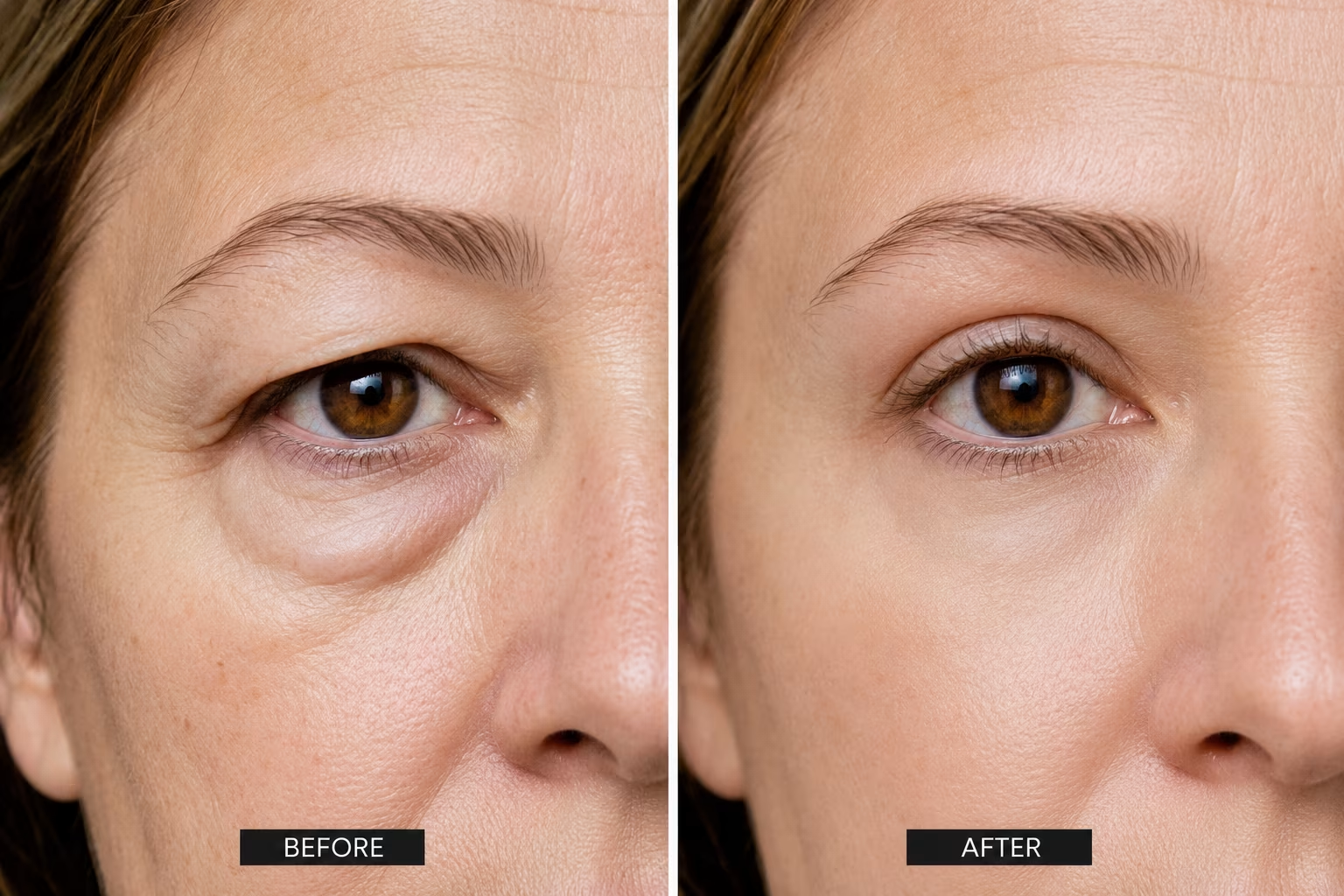
Patients are often surprised by the subtle yet profound change. You won’t look like a different person; you will look like a “rested” version of yourself.
-
The “Bright-Eyed” Look: The eyes appear larger and more alert.
-
Smooth Contours: The transition from the lower eyelid to the cheek becomes a smooth, continuous line, removing the aged “step” caused by bags.
-
Confidence Boost: Many patients report feeling more confident in social and professional settings because they no longer look “tired” or “uninterested.”
Recovery Timeline After Blepharoplasty
Recovery is generally faster than most patients expect, but patience is required during the initial swelling phase.
First 24 Hours
You may experience some blurred vision due to the lubricating ointment applied during surgery. Cold compresses are your best friend during this stage to minimize swelling.
First Week
-
Days 1–3: Swelling and bruising reach their peak.
-
Days 5–7: Sutures are typically removed. Most patients feel comfortable going out in public with sunglasses at this point.
Weeks 2–4
Bruising usually fades by day 10–14. You can return to work and light exercise. However, residual internal swelling may persist, meaning your final result is still “under construction.”
Months 1–3
The incision lines will begin to fade from pink to a faint white or skin-tone line. The final “settled” look of the eyelids is usually visible by the third month.
Recovery Timeline Chart
| Recovery Phase | What to Expect | Activity Level |
| Days 1–3 | Swelling, bruising, tightness, mild discomfort. | Rest at home; keep head elevated; cold compresses. |
| Days 4–7 | Swelling begins to subside; sutures are removed. | Light walking; restricted screen time to prevent dry eyes. |
| Days 7–14 | Bruising turns yellow/green and fades; can use makeup. | Return to desk work; no heavy lifting or gym. |
| Weeks 2–4 | Scars look pink but are healing; eyes feel normal. | Resume most exercises; avoid contact sports. |
| Months 3+ | Final results visible; scars become nearly invisible. | Full activity; enjoy the rejuvenated look! |
Note: Individual recovery times may vary based on health, age, and whether multiple procedures were performed.
Risks and Complications of Eyelid Surgery
While blepharoplasty is considered very safe when performed by an expert like Dr. Pushpendra Kanaujia, all surgery carries some risk.
-
Common Side Effects: Temporary swelling, bruising, and dry eyes are expected.
-
Infection and Bleeding: Rare but manageable with proper post-operative care.
-
Scarring: While incisions are hidden, some patients may experience hypertrophic scarring, though this is uncommon on the eyelids.
-
Asymmetry: Slight differences between the two eyes are natural, but significant asymmetry may require a minor touch-up.
-
Ectropion/Entropion: In rare cases, the lower lid may turn outward or inward; choosing an experienced surgeon significantly minimizes this risk.
-
Dry Eye Syndrome: Some patients experience temporary dryness, which is treated with lubricating drops.
Common Myths vs. Facts About Blepharoplasty
Myth 1: Eyelid Surgery Gives Instant Perfect Results
Fact: While the change is visible immediately, significant swelling means you won’t see your “true” result for several weeks.
Myth 2: Everyone Looks 10 Years Younger
Fact: While most see a dramatic improvement, the “10-year” mark is an average. Results depend on how much aging had occurred prior to surgery.
Myth 3: Surgery Is Only Cosmetic
Fact: Many patients undergo blepharoplasty to fix “visual field obstruction” caused by sagging skin, making it a functional necessity.
Myth 4: Recovery Is Extremely Painful
Fact: Most patients describe the sensation as “tightness” or “soreness” rather than sharp pain. It is generally very well-tolerated with basic over-the-counter pain relief.
Myth 5: Results Last Forever
Fact: While the fat removed during surgery does not grow back, your skin will continue to age. However, you will always look younger than you would have without the surgery.
How Long Do Blepharoplasty Results Last?
Upper eyelid surgery typically lasts 7 to 10 years, or sometimes even a lifetime, depending on the skin’s elasticity. Lower eyelid surgery rarely needs to be repeated because the fat pads removed or repositioned usually do not return.
To maximize the longevity of your results:
-
Sun Protection: Always wear sunglasses and SPF around the eyes.
-
Healthy Lifestyle: Avoid smoking, which accelerates skin aging and degrades collagen.
-
Skincare: Use medical-grade eye creams to keep the skin hydrated and firm.
Choosing the Right Plastic Surgeon
The success of your blepharoplasty depends almost entirely on the skill and artistic eye of your surgeon. The eyelids involve delicate muscles and nerves; there is no room for error.
When searching for the Best Plastic Surgeon in Lucknow, consider Dr. Pushpendra Kanaujia. An expert in the field, Dr. Kanaujia combines surgical precision with an aesthetic eye, ensuring that your results look natural and harmonious with the rest of your face.
What to look for in a surgeon:
-
Board Certification: Ensures the surgeon has met rigorous standards.
-
Specialization: Look for a surgeon who performs facial procedures regularly.
-
Portfolio: Review “Before and After” photos of actual patients.
-
Patient Reviews: Look for testimonials regarding both the results and the quality of care.
When Should You Consider Eyelid Surgery?
There is no “perfect age” for blepharoplasty. Some patients in their 20s or 30s seek it to remove hereditary eye bags, while others wait until their 50s or 60s to address age-related sagging.
You should consider surgery when:
-
Non-surgical treatments (like fillers or lasers) no longer provide the desired results.
-
You feel your appearance does not reflect your energy levels.
-
Your upper eyelids are heavy enough to cause forehead strain or vision issues.
Final Thoughts
Blepharoplasty is one of the most rewarding cosmetic procedures because it offers a high impact with relatively low downtime. By addressing the specific signs of aging around the eyes, it can truly “turn back the clock,” giving you a refreshed, youthful, and more approachable appearance.
While the procedure can make you look 10 years younger, the most important outcome is that you feel more confident in your own skin. Choosing an experienced professional like Dr. Pushpendra Kanaujia ensures that your safety and aesthetic goals remain the top priority.
Frequently Asked Questions
1. Can blepharoplasty make you look 10 years younger?
Yes, by removing the heavy skin and puffiness that characterize an aged face, many patients achieve a refreshed look that mimics their appearance from a decade prior.
2. How long does blepharoplasty last?
Upper eyelid surgery typically lasts 7-10 years, while lower eyelid surgery results are often permanent.
3. Is eyelid surgery painful?
Most patients report minimal pain. The primary sensation is one of tightness and mild irritation, which is easily managed with prescribed or over-the-counter medication.
4. How long is recovery after blepharoplasty?
Most patients return to social activities within 7 to 10 days and resume full physical activity within 3 to 4 weeks.
5. What age is best for eyelid surgery?
There is no “right” age. It is performed on adults of all ages who have excess skin or fat around the eyes, whether due to aging or genetics.
6. Can blepharoplasty improve vision?
Yes. If sagging upper eyelid skin is drooping over the pupil and obstructing your peripheral vision, blepharoplasty can significantly improve your sight.
7. What are the risks of eyelid surgery?
Risks include temporary dry eye, swelling, bruising, infection, and in rare cases, difficulty closing the eyes or asymmetry.
8. Does blepharoplasty leave scars?
The scars are very well hidden. Upper lid scars are tucked into the natural fold, and lower lid scars are either inside the eyelid or just below the lashes.
9. Can eye bags come back after surgery?
The fat removed during lower blepharoplasty does not typically grow back. However, the skin will continue to age, and new laxity may develop over many years.
10. Who is a good candidate for blepharoplasty?
Ideally, healthy individuals who do not smoke, have no serious eye conditions, and have realistic expectations about the outcomes of facial rejuvenation.
Contact Dr. Pushpendra Kanaujia
Aging around the eyes can affect both appearance and confidence. Understanding the benefits, risks, recovery process, and realistic expectations of blepharoplasty helps patients make informed decisions about facial rejuvenation.
For personalized consultation and expert guidance, Dr. Pushpendra Kanaujia, recognized by many patients as a Best Plastic Surgeon in Lucknow, offers comprehensive evaluation and treatment planning tailored to your individual aesthetic goals. Take the first step toward a more youthful you today.
