



FUE vs FUT Hair Transplant Surgery: Benefits, Risks & Results
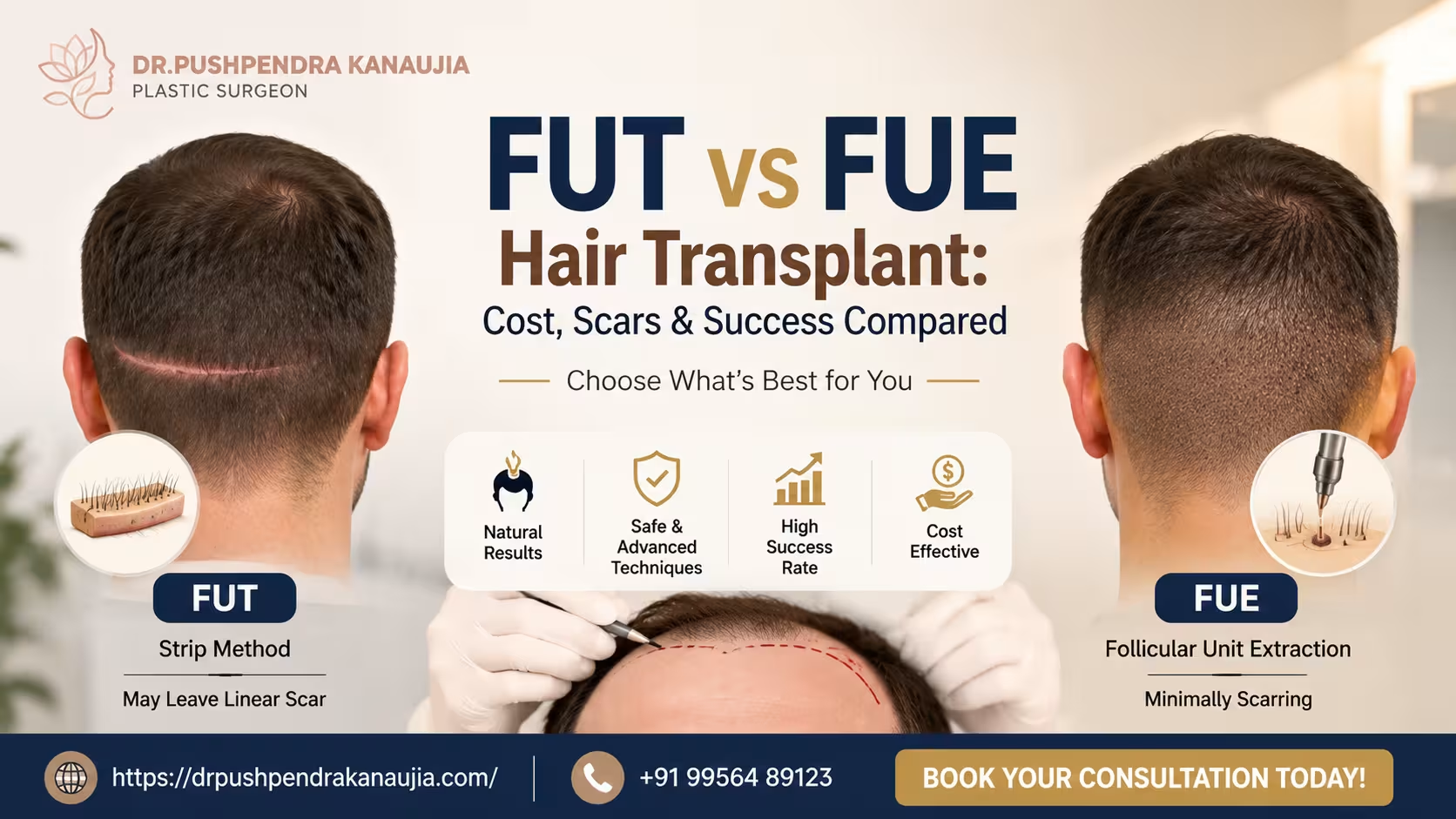
FUT and FUE are two common hair transplant techniques. FUT (Follicular Unit Transplantation) removes a strip of scalp to collect grafts, while FUE (Follicular Unit Extraction) extracts individual hair follicles directly from the donor area.
Deciding to undergo a hair transplant is a life-changing decision. It is not just about regaining hair; it is about reclaiming your confidence. However, the first hurdle most patients face is a technical one: FUT vs FUE.
As a specialist dedicated to restorative surgery, I often meet patients in my clinic who are overwhelmed by online information. Some have been told FUE is the only “modern” way, while others are concerned about the “linear scar” of FUT. The truth is that neither technique is universally “better.” The “best” technique is the one that aligns with your hair loss stage, your scalp laxity, your budget, and your aesthetic goals.
In this comprehensive guide, we will break down everything you need to know about these two procedures to help you make an informed choice. If you are looking for the best hair transplant in Lucknow, understanding these fundamentals is your first step toward a successful transformation.
Table of Contents
-
What Is FUT Hair Transplant?
-
What Is FUE Hair Transplant?
-
FUT vs FUE: Key Differences Explained
-
FUT vs FUE Scars Comparison
-
FUT vs FUE Recovery Time
-
FUT vs FUE Cost in India
-
FUT vs FUE Success Rate Compared
-
Which Hair Transplant Method Looks More Natural?
-
Who Is the Right Candidate for FUT or FUE?
-
Risks and Side Effects of FUT and FUE
-
Which Hair Transplant Method Is Better in 2026?
-
Final Verdict: FUT or FUE?
-
FAQs
What Is FUT Hair Transplant?
FUT (Follicular Unit Transplantation), often referred to as the “Strip Method,” is the traditional technique of hair restoration. Despite the rise of newer methods, it remains a gold standard for patients requiring a high volume of grafts.
The Strip Harvesting Method
In an FUT procedure, the surgeon removes a thin strip of healthy hair-bearing skin from the “permanent” donor zone (usually the back and sides of the head). This area is then closed with microscopic sutures.
Graft Preparation
Once the strip is removed, our specialized team uses high-powered microscopes to dissect the strip into individual follicular units (grafts). These units naturally contain 1 to 4 hairs. Because the dissection happens under direct visualization, the hair graft survival rate is often exceptionally high with FUT.
Ideal Candidates for FUT
FUT is typically recommended for patients with:
-
Advanced hair loss (Norwood Scale 5, 6, or 7).
-
A need for maximum hair density in a single session.
-
Limited donor hair availability, where every single follicle counts.
Expert Insight: One of the biggest advantages of FUT is that it often provides a higher graft yield in one session compared to FUE, making it a powerful tool for significant coverage.
What Is FUE Hair Transplant?
FUE (Follicular Unit Extraction) has become the most popular hair transplant method globally due to its minimally invasive nature.
Individual Follicle Extraction
Unlike FUT, FUE does not involve removing a strip of skin. Instead, the surgeon uses a specialized micro-punch tool (usually 0.7mm to 0.9mm in diameter) to extract individual hair follicles directly from the scalp.
The Punch Technique
Each extraction leaves a tiny circular point that heals as a nearly invisible white dot. Because no “strip” is taken, there are no stitches required. This makes the procedure highly attractive for those who prefer to keep their hair short.
Modern Popularity
FUE now dominates most modern hair transplant procedures globally. Its popularity stems from the lack of a linear scar and a significantly reduced recovery period. It is the preferred choice for younger patients and those seeking minor corrections or hairline lowering.
FUT vs FUE — Side-by-Side Comparison Table
| Feature | FUT (Strip Method) | FUE (Extraction Method) |
| Technique | Strip of scalp removed | Individual follicles extracted |
| Scarring | One linear scar | Tiny, scattered dot scars |
| Recovery | 10–14 days for surface healing | 3–5 days for surface healing |
| Pain Level | Moderate (during healing) | Mild |
| Grafts Per Session | Higher (up to 4,000+) | Moderate to high (up to 3,000) |
| Cost | Usually lower per graft | Usually higher per graft |
| Haircut Flexibility | Best for longer hair | Ideal for short or faded styles |
| Procedure Time | Shorter (4–6 hours) | Longer (6–10 hours) |
| Popularity in 2026 | Specific clinical cases | Most preferred by patients |
While the table provides a glance, the choice often comes down to the quality of your donor area and your lifestyle. For instance, an athlete who needs to return to the gym quickly might favor FUE, while a patient with extensive baldness might choose FUT for the density it provides.
FUT vs FUE Scars Comparison
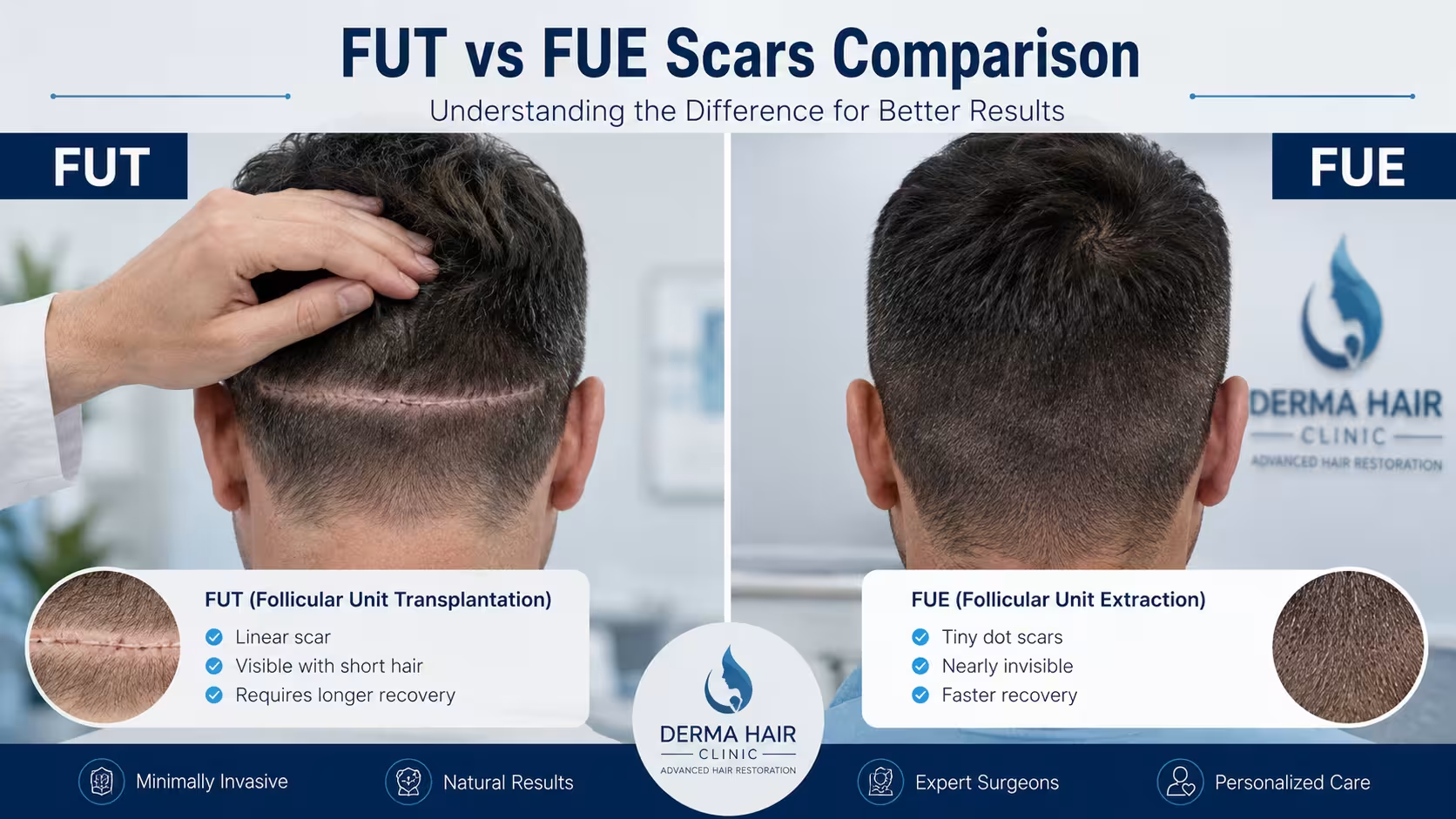
One of the most frequent questions I hear in my practice for the hair transplant in Lucknow is: “Will people be able to see my scars?”
Linear Scar in FUT
FUT leaves a single, thin horizontal scar at the back of the head. With modern “trichophytic closure” techniques, we can encourage hair to grow through the scar, making it very difficult to see even with moderately short hair. However, if you shave your head to a #0 or #1 guard, the line will be visible.
Dot Scars in FUE
FUE creates hundreds or thousands of tiny “dot” scars. These are dispersed across the donor area. Because they are so small and spread out, they are virtually undetectable even with very short haircuts. This “scarless” (though technically “minimally scarring”) appearance is the primary reason many patients opt for FUE.
Doctor’s Note: Scar visibility also depends on your skin’s healing ability. Some people develop thicker scars (keloids), which is why a prior scalp assessment is vital.
FUT vs FUE Recovery Time
The FUE vs FUT recovery experience differs primarily in the first week.
-
FUE Recovery: Most patients feel “normal” within 48 hours. The tiny extraction sites scab over and fall off within 5–7 days. You can usually return to desk work the next day and resume light exercise in a week.
-
FUT Recovery: Since there are sutures involved, there is a feeling of “tightness” at the back of the head for a few days. Stitches are typically removed after 10–14 days. You may need to wait 2–3 weeks before resuming heavy weightlifting or intense cardio.
General Post-Op Tips:
-
Sleeping Position: Sleep with your head elevated at a 45-degree angle for the first 3 nights to reduce swelling.
-
Swelling: Some forehead swelling is common in both methods; it usually peaks on day 3 and disappears by day 5.
FUT vs FUE Cost in India
When looking for a hair transplant cost estimate, it is important to understand that you are paying for the surgeon’s expertise and the time taken.
-
Graft-Based Pricing: Most clinics in India charge per graft. FUE is generally more expensive than FUT because it is more labor-intensive for the surgeon.
-
Technological Factors: The use of specialized punches, storage solutions like ATP (Adenosine Triphosphate), and state-of-the-art operation theaters in cities like Lucknow can influence the price.
-
The Risk of “Cheap” Transplants: Beware of clinics offering unusually low prices. Hair transplantation is a surgical procedure. “Cheap” clinics often use untrained technicians instead of doctors, leading to poor growth or, worse, a “depleted” donor area that cannot be fixed.
FUT vs FUE Success Rate Compared
Both FUT and FUE are highly successful procedures. The hair transplant success rate in modern clinics typically ranges between 90% and 95%.
-
FUT Success: Often has a slightly higher graft survival rate because the follicles are handled less and dissected under microscopes with protective tissue intact.
-
FUE Success: Success depends heavily on the “transection rate” (the rate at which follicles are accidentally damaged during extraction). In the hands of an expert surgeon, FUE success rates are virtually identical to FUT.
The Bottom Line: The success of your transplant depends 20% on the technique and 80% on the skill of the surgeon and your post-operative care.
Which Hair Transplant Method Looks More Natural?
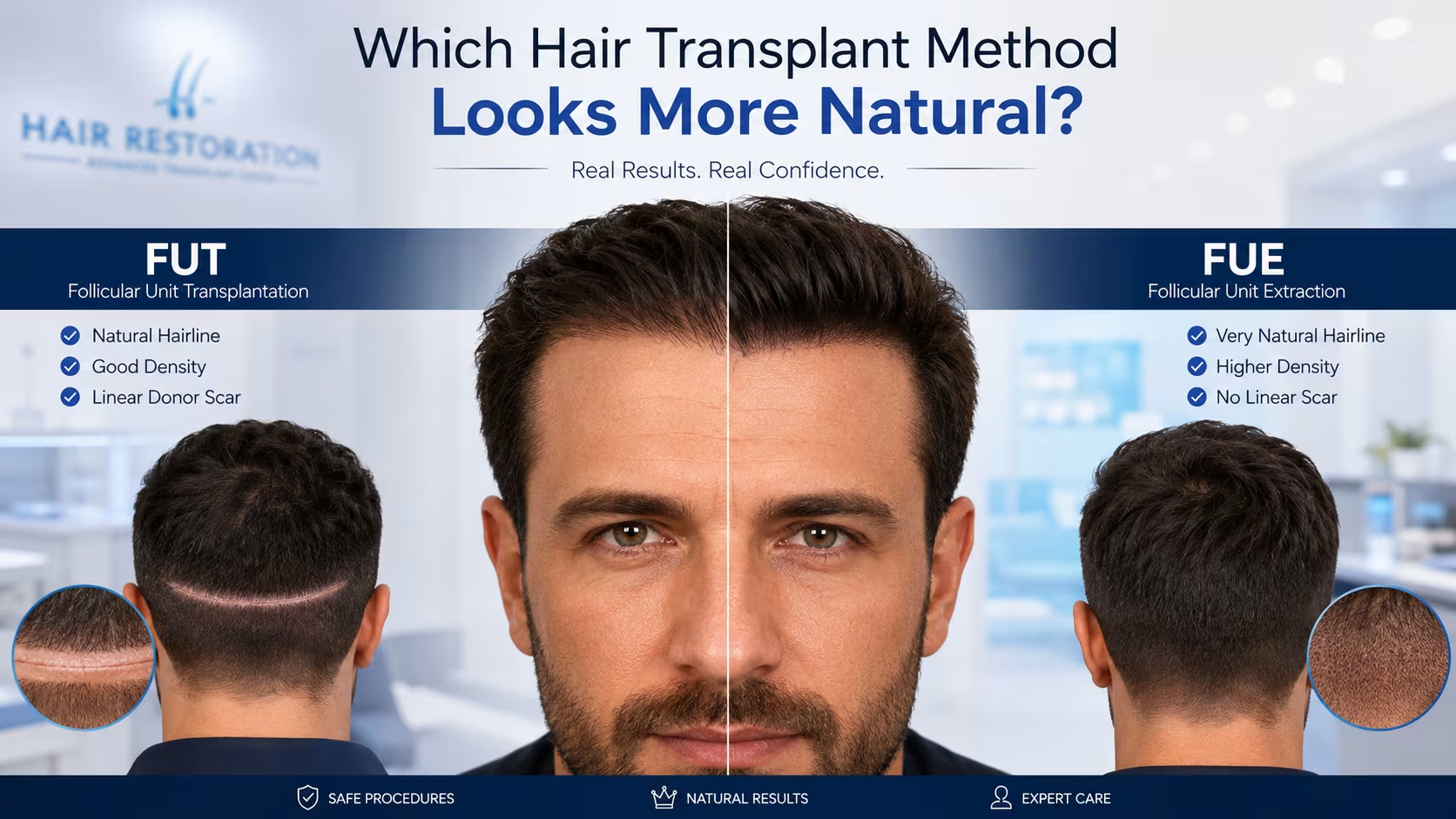
A common myth is that FUE looks more natural than FUT. This is incorrect.
The technique used to extract the hair (FUT or FUE) has nothing to do with how the hair looks once it is planted.
The “natural look” comes from:
-
Hairline Design: Following the natural contours of your face.
-
Graft Placement: Placing single-hair grafts at the very front and multi-hair grafts further back for density.
-
Angle and Direction: Mimicking the way your original hair grew.
Patients seeking the best hair transplant in Lucknow often prioritize these artistic details. Whether the hair was taken via a strip or individual punch, the results will be indistinguishable to the naked eye once the hair grows out.
Who Is the Right Candidate for FUT or FUE?
Choose FUT if:
-
You have a large area of baldness to cover.
-
You are okay with a linear scar (usually covered by hair).
-
You want the most cost-effective option for a high number of grafts.
-
You have tight scalp skin (low laxity).
Choose FUE if:
-
You like to wear your hair very short.
-
You want the fastest possible recovery and return to the gym.
-
You only need a small to moderate number of grafts (e.g., filling in temples).
-
You are prone to visible scarring.
Risks and Side Effects of FUT and FUE
Honesty is the foundation of patient trust. Like any surgery, there are risks:
-
Shock Loss: Temporary shedding of existing hair near the transplant site. It almost always grows back.
-
Numbness: Temporary loss of sensation in the donor area (more common in FUT, but usually resolves in a few months).
-
Overharvesting (FUE specific): If too many hairs are taken from the back, the donor area can look “moth-eaten” or thin.
-
Infection: Extremely rare in sterile clinic environments but possible if post-op hygiene is neglected.
Which Hair Transplant Method Is Better in 2026?
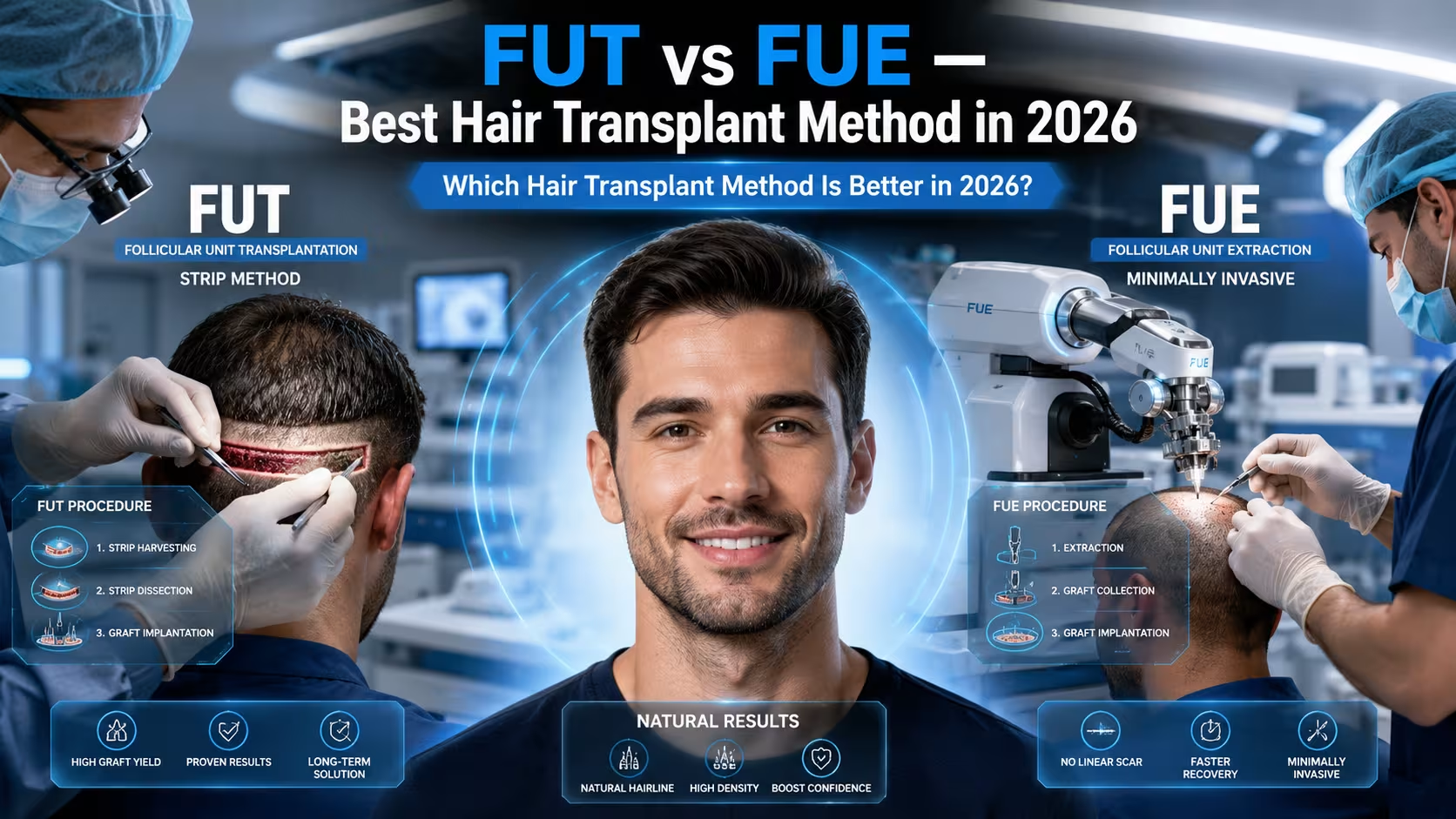
As we move through 2026, the trend is leaning heavily toward FUE and its variations (like DHI or Robotic FUE).
Why FUE is Trending:
-
Minimally Invasive Preference: Patients today want “lunchtime” procedures with minimal downtime.
-
Advanced Tools: New AI-guided punches and oscillating tools have reduced transection rates to near zero.
-
Social Media Awareness: With more people sharing their journeys, the “no-scar” appeal of FUE has made it the primary choice for the younger generation.
However, FUT is not obsolete. In 2026, many top surgeons still use FUT for “Mega-Sessions” or for patients who have already exhausted their FUE donor supply. The most advanced approach in 2026 is often a combination of both (FUE + FUT) for maximum coverage in advanced baldness.
Final Verdict — FUT or FUE?
Neither is universally better; they are different tools in a surgeon’s toolkit.
-
If you need density and volume and don’t mind a hidden linear scar, FUT is an excellent, time-tested choice.
-
If you value flexibility, short hair, and quick healing, FUE is the superior option.
Consulting an experienced surgeon like Dr. Pushpendra Kanaujia helps determine the most suitable approach for long-term results. We analyze your donor hair density, scalp elasticity, and future hair loss patterns to create a personalized blueprint.
FAQs Section
1. Which is better: FUT or FUE hair transplant?
There is no single “better” method. FUE is better for short hair and fast recovery, while FUT is often better for patients needing a large number of grafts in one sitting.
2. Does FUE leave scars?
FUE leaves tiny circular scars (dots) that are usually less than 1mm in size. They are typically invisible unless the head is completely shaved.
3. Is FUT cheaper than FUE?
Generally, yes. FUT is less time-consuming for the surgical team, which often results in a lower cost per graft compared to FUE.
4. Which hair transplant has a better success rate?
Both have success rates above 90% when performed by experts. FUT may have a slight edge in follicle survival due to microscopic dissection, but the difference is minimal in modern clinics.
5. Is FUE more painful than FUT?
FUE is generally less painful during recovery because there are no deep incisions or stitches. Both procedures are painless during the surgery due to local anesthesia.
6. How long do hair transplant results last?
Results are permanent. The hair is taken from the “permanent zone” at the back of the head, which is genetically resistant to the hormones that cause balding.
7. Can FUT scars be hidden?
Yes, they are easily hidden by hair that is at least a half-inch long. If desired, FUE can even be used later to “camouflage” an old FUT scar.
8. Why is FUE more popular now?
Because it is minimally invasive, requires no stitches, allows for short haircuts, and has a faster recovery time.
9. Which hair transplant gives more density?
FUT often allows for more grafts to be harvested in a single session, which can result in higher perceived density for patients with advanced hair loss.
10. What is the recovery time for FUE hair transplant?
Surface healing takes 3–5 days. Most patients return to all normal activities, including heavy exercise, within 7–10 days.
Trending Insights for 2026
The landscape of hair restoration is shifting. In 2026, we are seeing a massive rise in “Preventative Hair Restoration.” Younger patients are opting for smaller FUE sessions earlier in their hair loss journey rather than waiting for significant balding. Furthermore, the stigma surrounding hair transplants has vanished, largely due to celebrities and influencers openly discussing their FUE procedures. The demand for natural hairlines—ones that look slightly irregular and age-appropriate—has surpassed the demand for the “perfectly straight” hairlines of the past.
A Realistic Note from the Specialist
A hair transplant is a journey of patience. Whether you choose FUT or FUE, the “shedding phase” (where the transplanted hair falls out before growing back) is inevitable. Don’t be discouraged. Between months 4 and 12, you will see the transformation.
Myths vs. Facts:
-
Myth: Hair transplants are only for old men.
-
Fact: Men and women in their 20s and 30s are now the most common demographic for FUE.
-
Myth: You can get a full head of hair even if you are completely bald.
-
Fact: You are limited by your donor area. We must manage expectations and prioritize the most visible areas first.
Choosing between FUT and FUE hair transplant depends on your hair loss pattern, donor area, lifestyle, and long-term goals. A personalized consultation helps determine the safest and most effective option for natural-looking hair restoration.
Consult Dr. Pushpendra Kanaujia for expert guidance on selecting the right hair transplant method and achieving natural, long-lasting results. Secure your confidence with the best hair transplant in Lucknow.
